Ta Prohm – Exploring the “Tomb Raider Temple” and Its Tree-Choked Ruins
Few places in Southeast Asia capture the imagination quite like Ta Prohm. Known globally as the “Tomb Raider temple Cambodia,” this atmospheric ruin is where colossal strangler fig and silk-cotton trees wrap themselves around 12th-century sandstone walls in a breathtaking display of nature reclaiming architecture.
Built by Jayavarman VII as a Mahayana Buddhist monastery, Ta Prohm evokes a cinematic, almost surreal mood. Unlike many restored temples in the Angkor complex, it has been deliberately preserved in a semi-ruined state, allowing visitors to experience what early European explorers encountered when they first documented Angkor.
This guide explores Angkor Ta Prohm history, architectural marvels, photography highlights, and the best time to visit Ta Prohm for an unforgettable journey into Cambodia’s Khmer Buddhist ruins.
History and Significance of Ta Prohm
A Royal Monastery of Scale and Power
Constructed in the late 12th century, Ta Prohm was dedicated by Jayavarman VII to his mother. It functioned not only as a monastery but also as a major center of Buddhist learning and administration.
Historical inscriptions reveal staggering numbers:
- Over 12,500 residents, including monks and temple attendants
- Hundreds of dancers
- Support staff and laborers from surrounding villages
- Vast temple lands and resources
This makes the Jayavarman VII monastery one of the most significant religious institutions of the Khmer Empire.
For broader historical context on the empire’s rise and fall, Encyclopaedia Britannica provides an overview: https://www.britannica.com/place/Khmer-Empire.
Abandonment and Preservation Philosophy
After the decline of the Khmer Empire in the 15th century, Ta Prohm was gradually abandoned. When French conservationists began restoring Angkor in the 19th and 20th centuries, they made a deliberate decision: Ta Prohm would remain largely as it was found.
This contrasts with highly restored sites such as Angkor Wat. The result is an immersive, jungle-overgrown environment that defines the modern perception of Angkor.
Ta Prohm is now part of the UNESCO-listed Angkor Archaeological Park (official listing: https://whc.unesco.org/en/list/668/).
Architectural Marvels and Tree Entanglements
Temple Layout and Design
The Ta Prohm temple follows a classic Khmer layout:
- Five rectangular enclosures
- Gopuras (tower gateways) at cardinal points
- Long galleries with intricate bas-reliefs
- A central sanctuary
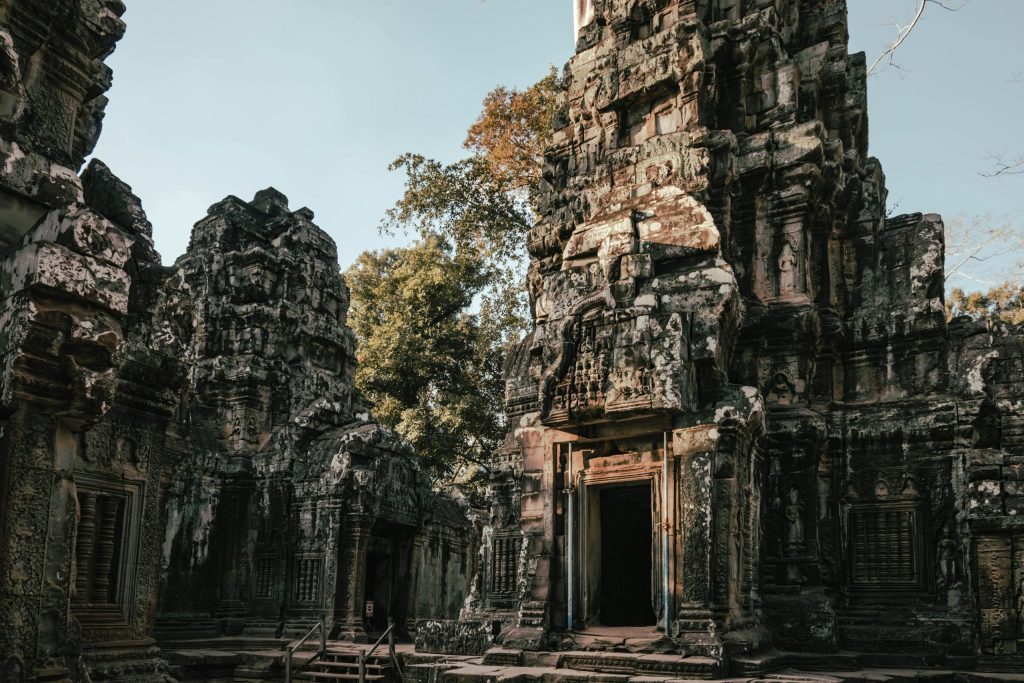
Its sandstone corridors, libraries, and courtyards once housed sacred images and royal inscriptions in Sanskrit.
Ta Prohm Trees and Roots
What sets Ta Prohm apart are its legendary trees:
- Strangler figs (Spung trees)
- Tetrameles nudiflora (silk-cotton trees)
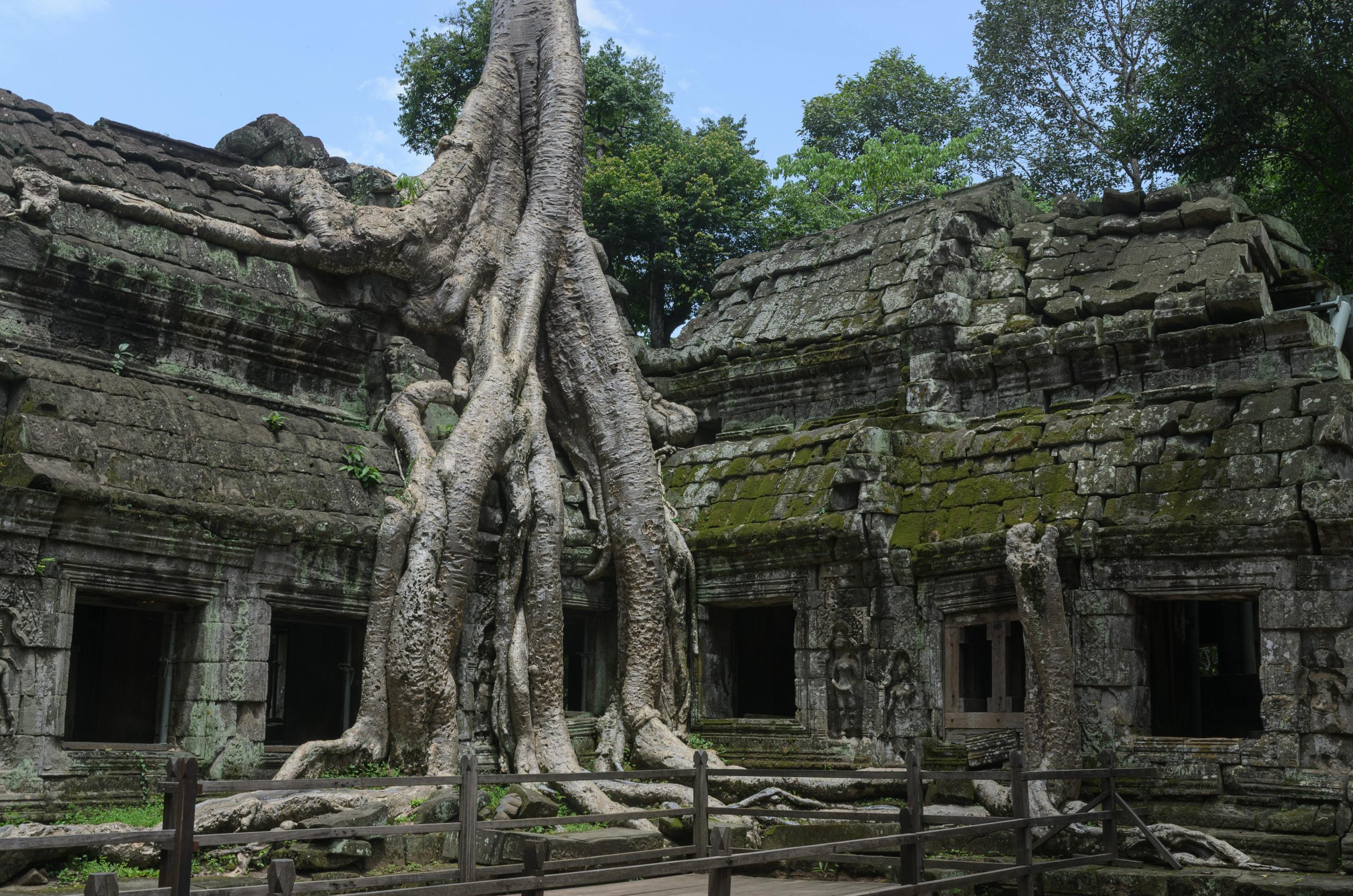
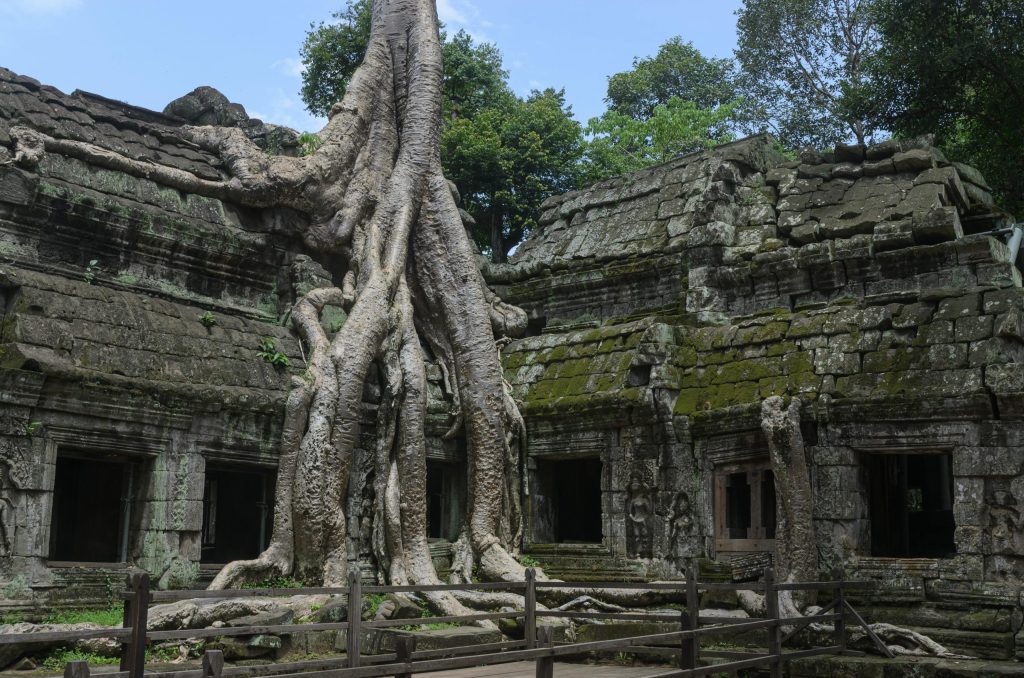
Their massive roots cascade over walls, pry apart stones, and engulf entire galleries. In some places, the roots form natural arches and tunnels, creating the iconic “tree-strangled corridor” effect.
Rather than removing these trees, conservationists stabilize both tree and temple a delicate balance between preservation and safety. These Ta Prohm conservation efforts involve structural reinforcement and controlled access via wooden walkways.
Iconic Spots and Photographic Highlights
Ta Prohm is one of the most photographed temples in Cambodia. For serious photographers and travelers seeking the best Ta Prohm photography spots, these areas stand out:
East Entrance Gopura
The eastern gateway is framed by towering trees and filtered morning light. Arriving early (around 5:30–6:00 AM) provides softer tones and fewer visitors.
Tree-Strangled Corridor
This narrow passageway showcases roots gripping sandstone blocks like giant serpents. It perfectly captures the theme of jungle reclaiming civilization.
Central Sanctuary
The central tower once enshrined sacred Buddhist imagery. Today, a partially hidden Buddha face surrounded by foliage offers a quiet moment of spiritual reflection amid the ruins.
Western Enclosure
Here you’ll find detailed carvings of apsaras (celestial dancers) and mythological scenes fine examples of Khmer artistry that rival carvings at Bayon.
Ta Prohm in Popular Culture
Ta Prohm gained international fame through the 2001 film Lara Croft: Tomb Raider, starring Angelina Jolie. The movie cemented its reputation as the definitive “Tomb Raider temple Cambodia.”
Since then, it has become:
- A bucket-list destination for travelers
- A backdrop for documentaries and travel shows
- A favorite location for influencers and filmmakers
Despite its fame, Ta Prohm retains a haunting stillness in quieter corners especially early in the morning before tour groups arrive.
Modern preservation includes:
- Elevated wooden walkways
- Restricted climbing zones
- Ongoing structural stabilization
These measures ensure that increased tourism does not accelerate damage to fragile sandstone and root systems.
Visiting Tips and Best Practices
Planning a Siem Reap Ta Prohm tour requires some strategy.
Best Time to Visit Ta Prohm
- Early morning (5:30–8:00 AM) for cooler temperatures and soft lighting
- Late afternoon for warm golden tones
- Avoid midday heat and peak tour hours
Tickets and Access
Ta Prohm is included in the Angkor Pass, available in 1-day, 3-day, or 7-day options. Official ticket information can be found at https://www.angkorenterprise.gov.kh/.
Getting There
From Siem Reap:
- Tuk-tuks (remorks) are the most convenient option
- Private car tours offer air-conditioned comfort
- Cycling is possible but physically demanding
What to Wear and Bring
- Sturdy walking shoes (uneven stones and roots)
- Water and sun protection
- Clothing covering shoulders and knees
- Respect for no-climb signage
Humidity can be intense, and pathways may be slippery during rainy season.
Summary Table: Ta Prohm Highlights and Features
| Feature | Description | Why Visit |
|---|---|---|
| Strangler Fig Trees | Massive roots enveloping galleries | Iconic “Tomb Raider” photo opportunities |
| East Gopura | Tree-framed entrance tower | Sunrise photography perfection |
| Bas-Relief Galleries | Carvings of deities and daily life | Close view of Khmer artistry |
| Central Buddha | Partially hidden sacred statue | Spiritual atmosphere amid ruins |
| Wooden Walkways | Elevated preservation paths | Easy access while protecting structures |
Conclusion
Ta Prohm is where history, spirituality, and untamed nature converge. Its towering trees, weathered galleries, and sacred carvings embody both the brilliance of Khmer engineering and the relentless passage of time.
From its role as a Jayavarman VII monastery to its fame as the Tomb Raider temple Cambodia, Ta Prohm offers a layered, emotionally powerful experience unlike any other site in Angkor.
Plan your visit thoughtfully, arrive early, and take time to wander beyond the main corridors. In this extraordinary setting, jungle meets eternity and the past feels vividly alive.