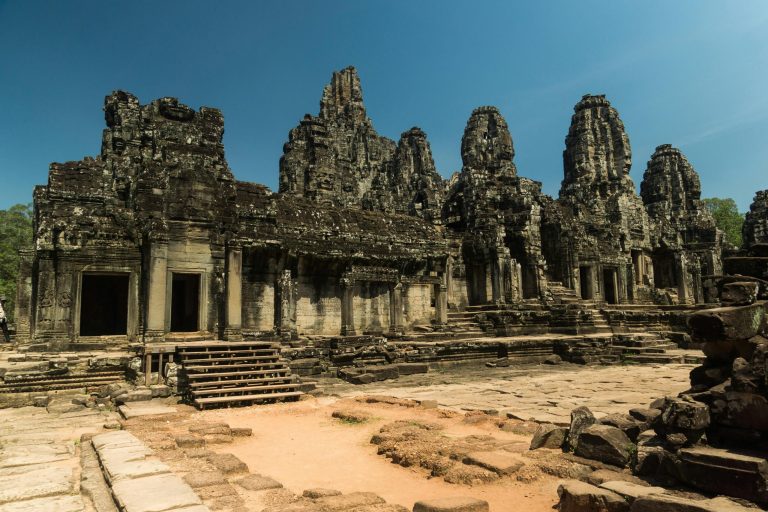
Preah Khan – Exploring the Forgotten Temple of the Sacred Sword in Angkor
Hidden within the northern reaches of the Angkor complex, Preah Khan unfolds as one of the most atmospheric and expansive temple sites in Cambodia. Built in the late 12th century by Jayavarman VII, its name translates to “Sacred Sword,” honoring his father, Dharanindra.
More than a temple, Preah Khan was once a thriving Khmer Buddhist monastery and urban center. Today, its crumbling corridors, towering silk-cotton trees, and intricate carvings offer a quieter, more exploratory alternative to Angkor Wat. For travelers seeking authentic Angkor hidden temples, Preah Khan delivers scale, serenity, and layered history.
History and Royal Significance
Jayavarman VII Preah Khan Legacy
Constructed around 1191 AD following victories over the Cham invaders, Preah Khan symbolized both military triumph and spiritual devotion. Under Jayavarman VII, Angkor experienced a surge in monumental construction rooted in Mahayana Buddhist ideals of compassion and service.
Preah Khan functioned as:
- A royal Buddhist center
- A university and monastery
- A city housing thousands of residents
- A network hub connected to hospitals across the empire
This reflects the king’s broader vision of public welfare and religious merit.
For broader historical context on the Khmer Empire’s expansion and transitions, Encyclopaedia Britannica provides an authoritative overview: https://www.britannica.com/place/Khmer-Empire.
Religious Transitions
Over time, the temple underwent Hindu adaptations. Shiva lingas were installed in certain sanctuaries, illustrating the Khmer Empire’s fluid religious landscape. This blending of Mahayana Buddhism and Shaivism makes Angkor Preah Khan history especially significant in understanding Southeast Asia’s syncretic traditions.
By the 15th century, as Angkor declined, Preah Khan was gradually abandoned left to the jungle’s embrace.
Architectural Layout and Unique Features
Monumental Scale
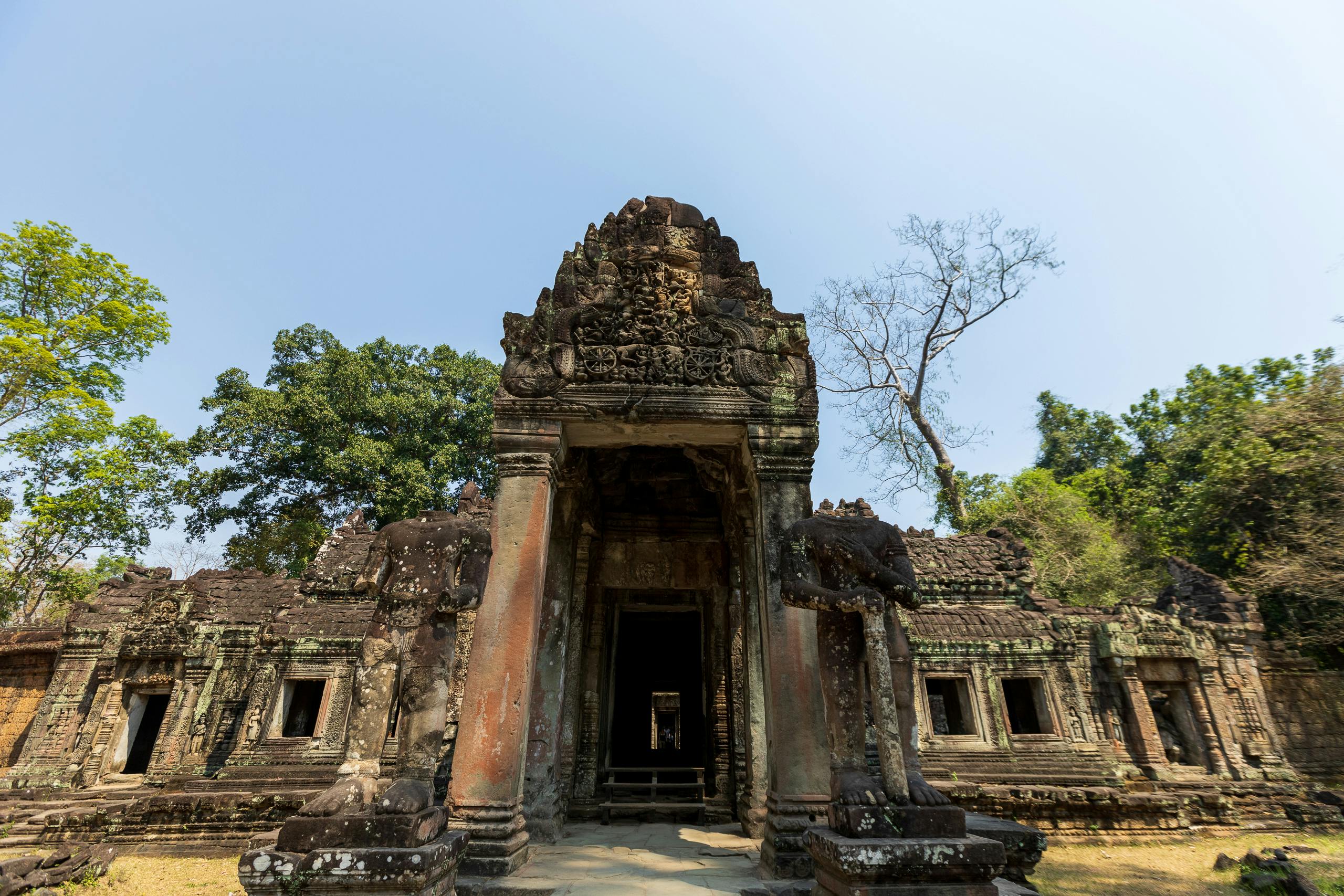
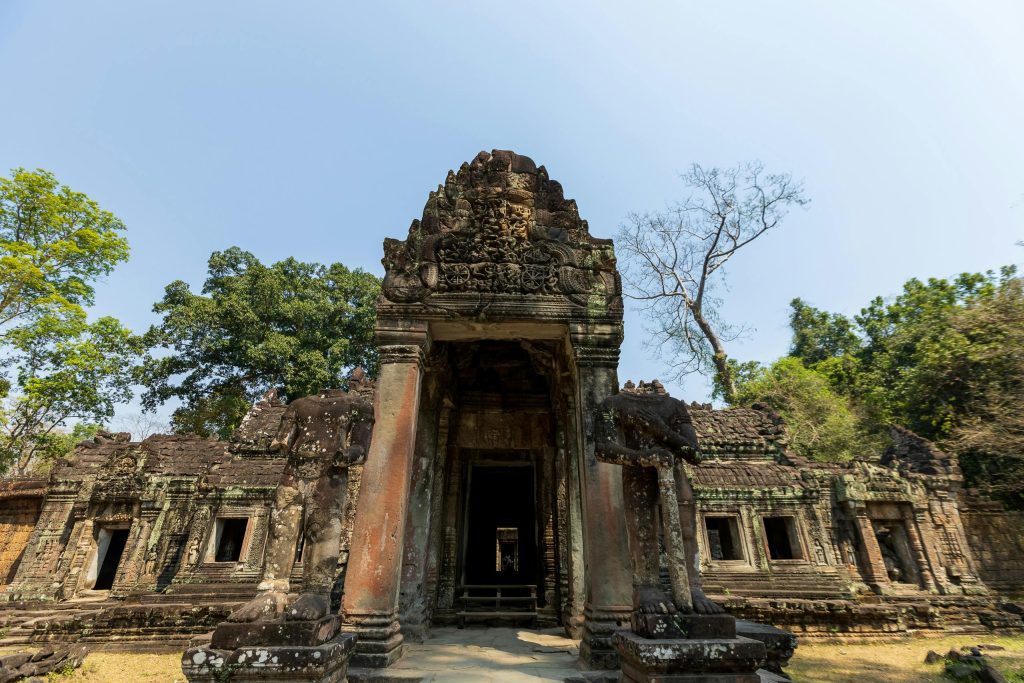
Preah Khan’s rectangular layout spans approximately 700 by 900 meters. Four monumental gopuras (gateways) mark the cardinal directions, each approached via naga balustrades and flanked by guardian figures.
Its scale rivals that of Angkor Thom, though its atmosphere feels more intimate and less crowded.
Central Sanctuary and Galleries
At the heart of the complex lies a central sanctuary containing:
- A stupa reflecting Buddhist devotion
- A garbhagriha (inner sanctum)
- Lingas from later Hindu adaptations
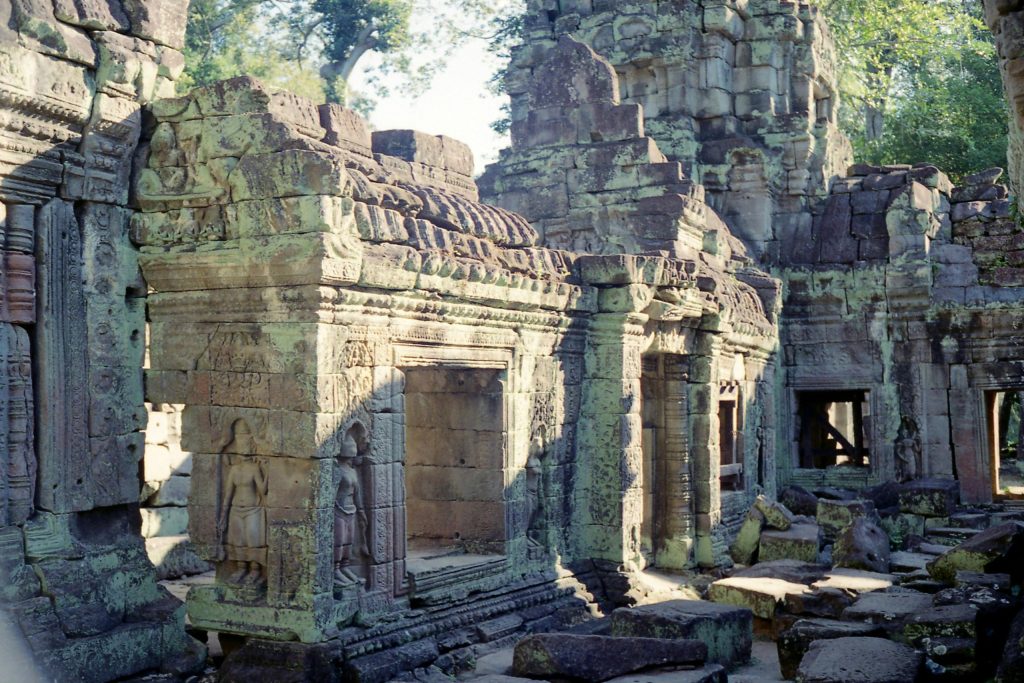
Surrounding corridors reveal collapsed roofs and dramatic Preah Khan carvings and trees, where strangler figs and silk-cotton roots intertwine with sandstone walls.
House of Fire
One of the temple’s most intriguing structures is the so-called “House of Fire,” believed to have functioned as a ceremonial hall or rest house for pilgrims. Its elongated shape and unique stonework distinguish it from surrounding galleries.
Star-Shaped Windows
Throughout the complex, carved stone screens and star-shaped windows filter natural light into darkened corridors, creating an almost cinematic interplay between shadow and illumination.
Standout Structures and Carvings
Main Gopura (East Entrance)
The eastern entrance provides a dramatic introduction. Massive stone faces, stylistically reminiscent of Bayon, draw visitors inward toward the mysterious interior.
Corner Towers
Multi-tiered corner towers display intricate lintels featuring Avalokiteshvara and mythological narratives. These carvings exemplify the temple’s Mahayana Buddhist heritage.
Preah Khan Bas-Reliefs
Detailed bas-relief panels depict:
- Battle scenes against the Cham
- Asuras (demons) and devas (gods)
- Apsaras in flowing dance poses
- Scenes of daily Khmer life
These narrative carvings transform stone into historical storytelling.
Tree Overgrowth
Like Ta Prohm, Preah Khan features dramatic tree overgrowth. However, its corridors are often more accessible, allowing deeper exploration without heavy crowding.
Spiritual Symbols and Inscriptions
Preah Khan stands out for its transitional iconography:
- Lokas (cosmic realms) carved into pediments
- Garuda figures supporting lintels
- Bodhisattva imagery reflecting Mahayana devotion
- Shiva lingas added during Hindu phases
Sanskrit and Old Khmer inscriptions document royal conquests, land donations, and the temple’s function as a healing and administrative center.
This synthesis of Buddhist and Hindu symbolism exemplifies Khmer religious pluralism a defining feature of Angkorian civilization.
Visiting Preah Khan: Tips and Access
Location
Preah Khan lies approximately 5 kilometers west of Angkor Thom and is included on the Preah Khan Grand Circuit route.
From Siem Reap, visitors typically travel via:
- Tuk-tuk (remork)
- Private driver
- Guided tour
Official ticket information for Angkor passes is available through Angkor Enterprise: https://www.angkorenterprise.gov.kh/
Best Time to Visit
- Early morning for cooler temperatures
- Soft light filtering through corridors
- Fewer tour groups
Exploring counterclockwise provides a logical and immersive route through the complex.
Practical Advice
- Wear sturdy shoes for uneven stones
- Bring water and sun protection
- Hire licensed guides to interpret inscriptions
- Respect preservation walkways and no-climb zones
For those researching Visiting Preah Khan Siem Reap, a multi-day Angkor pass allows ample time to explore without rushing.
Summary Table: Preah Khan Highlights and Features
| Feature | Description | Why Explore It |
|---|---|---|
| East Gopura | Monumental gate with Bayon-style faces | Dramatic entry to the complex |
| Tree-Entwined Galleries | Collapsed corridors overtaken by roots | Immersive jungle-temple atmosphere |
| Bas-Relief Panels | Scenes of battles and mythology | Rich Khmer storytelling |
| House of Fire | Unique ceremonial hall | Rare architectural discovery |
| Central Sanctuary | Buddhist stupa and Shiva lingas | Spiritual and symbolic core |
Conclusion
Preah Khan rewards those willing to wander beyond Angkor’s most famous landmarks. Its vast scale, spiritual complexity, and atmospheric decay capture the architectural genius of the Khmer Empire at its zenith.
From sacred inscriptions and bodhisattva carvings to corridors reclaimed by trees, the Sacred Sword temple Cambodia offers an immersive journey into the empire’s religious and political heart.
For travelers seeking depth, serenity, and authentic ruin exploration near Angkor Thom, Preah Khan stands as one of the most compelling and underappreciated treasures in Cambodia’s ancient landscape.