Prasat Ta Som – Uncovering the Remote Angkor Temple Overgrown with Strangler Figs
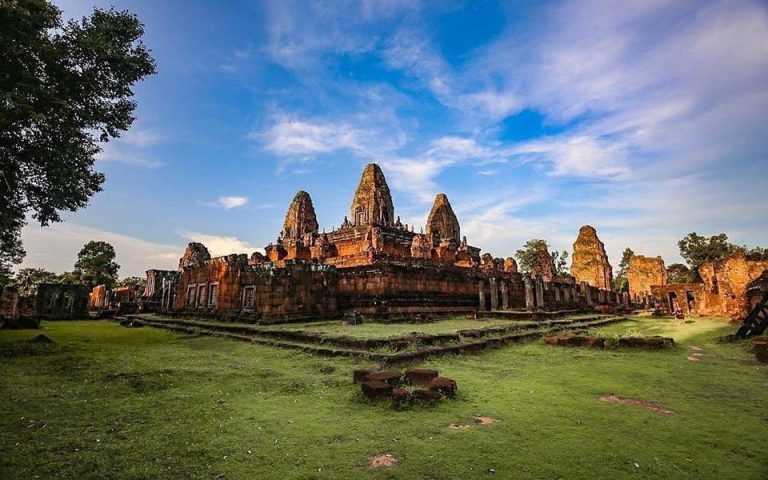
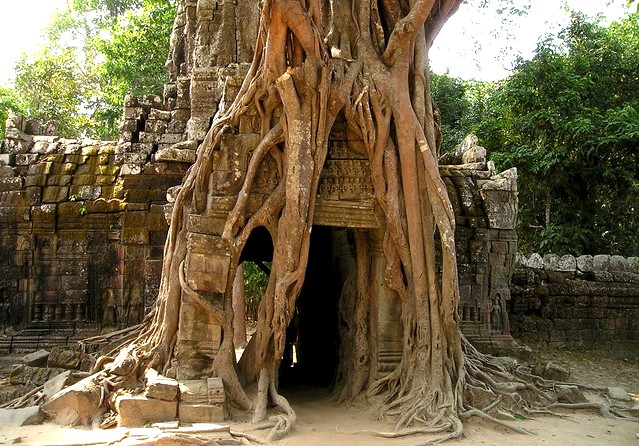
Among the vast constellation of temples scattered across Angkor Archaeological Park, Prasat Ta Som stands quietly apart. Small in scale yet immense in atmosphere, this late 12th-century sanctuary is where ancient Khmer stonework fuses seamlessly with colossal strangler fig roots, creating one of the most photogenic scenes in Cambodia.
Built during the reign of Jayavarman VII, Ta Som temple Angkor offers a far more intimate encounter than headline icons like Angkor Wat. Tucked along the Grand Circuit Angkor temples route near Siem Reap, it rewards travelers who venture beyond the main crowds in search of contemplative ruins and authentic Khmer decay.
This is a Khmer strangler fig temple where nature has not been subdued but allowed to collaborate with architecture.
History and Royal Dedication

Constructed around 1180 AD, Prasat Ta Som was commissioned by Jayavarman VII as a Mahayana Buddhist monastery dedicated to his father, Dharanindra. Jayavarman VII’s reign marked a transformative period in the Khmer Empire, characterized by expansive building projects, hospitals, rest houses, and temples rooted in Buddhist cosmology.
Unlike monumental state temples, Ta Som functioned as a modest spiritual retreat. Its smaller footprint reflects the devotional and commemorative nature of the site rather than imperial grandeur.
As the political center of the empire shifted eastward and the Angkor heartland gradually declined, Ta Som was abandoned. Its relative isolation preserved it from aggressive restoration campaigns. Today, it retains a raw, time-worn authenticity that speaks directly to Angkor’s late period architecture.
For broader historical context, UNESCO’s documentation of the Angkor site through UNESCO outlines the significance of Jayavarman VII’s architectural legacy across the region.
Striking Architecture and Tree Embrace
Though compact, Prasat Ta Som follows a classic Khmer temple plan.
Layout and Design
- A square enclosure surrounded by a laterite wall
- A moat crossed by a stone causeway
- Naga balustrades flanking the approach
- A central sanctuary (prasat)
The eastern gopura the entrance tower is the undisputed highlight. Here, a massive strangler fig cascades over the crumbling stone like a natural curtain. The Ta Som tree roots gopura composition rivals the drama of Ta Prohm but on a more intimate scale.
Artistic Details
Carved lintels depict Avalokiteshvara, the bodhisattva of compassion, alongside intricate floral and vegetal motifs. Despite its modest dimensions, the finesse of the bas-reliefs reflects the artistic maturity of the Angkor late period architecture.
The interplay between stone geometry and organic root systems creates a powerful visual metaphor: permanence challenged and enriched by time.
Key Features and Hidden Details
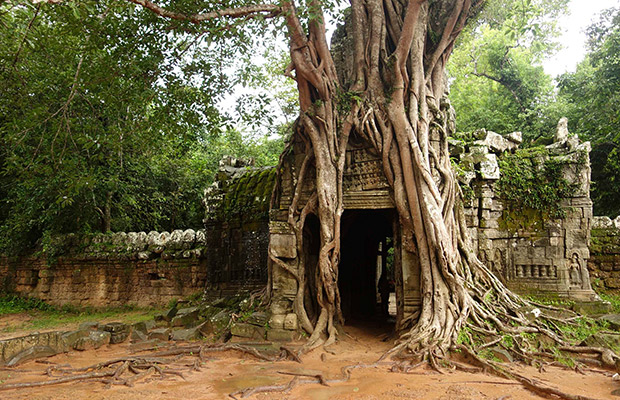
Eastern Gopura
The defining image of Prasat Ta Som. Tree roots descend over the entrance tower in thick, muscular strands, gripping sandstone blocks. For Ta Som photography spots, this is the frame that draws both amateurs and professionals alike.
Central Sanctuary
Inside, the compact sanctuary once housed Buddhist imagery. Today, fragmented statues and collapsed galleries create a layered composition of ruin and resilience. Star-shaped window openings filter light dramatically into the interior.
Guardian Figures
Asuras and devas line the causeway, echoing the cosmic symbolism seen at Angkor Thom but rendered here on a miniature scale. These guardian figures reinforce the temple’s spiritual threshold.
Bas-Reliefs
Look closely and you’ll find subtle carvings of mythological scenes partially veiled by moss and creeping vines. The details reward slow observation, making Visiting Prasat Ta Som Siem Reap a contemplative experience rather than a rushed checklist stop.
Why Prasat Ta Som Stands Out
Among Remote Angkor hidden gems, Prasat Ta Som excels for three reasons:
1. Solitude
Compared to flagship temples, foot traffic is lighter. You can often wander the enclosure in near silence, interrupted only by birdsong and rustling leaves.
2. Intimate Scale
Where Ta Prohm overwhelms with size, Ta Som feels personal. The proportions allow visitors to absorb architectural nuance without sensory overload.
3. Photographic Drama
Golden hour light filtering through the strangler fig canopy produces cinematic contrasts between shadow and sandstone. For serious photographers mapping Ta Som photography spots, the eastern gopura is a masterclass in natural framing.
It is Angkor distilled history, devotion, and jungle reclamation in harmonious tension.
Visiting Prasat Ta Som: Practical Guide
Prasat Ta Som lies along the Grand Circuit Angkor temples, approximately 45 km from central Siem Reap depending on your route.
Access and Timing
- Included with the standard Angkor multi-day pass
- Best paired with visits to Preah Khan or Banteay Srei
- Ideal exploration time: 20–30 minutes
Late morning or late afternoon provides softer lighting and fewer tour groups.
Practical Tips
- Wear sturdy shoes paths are uneven and rubble-strewn
- Climbing is prohibited to protect fragile stonework
- Bring water; shade is available but humidity can be high
As part of responsible heritage tourism, follow guidelines set by the APSARA Authority to help preserve these delicate ruins.
Summary Table: Prasat Ta Som Highlights
| Feature | Description | Why Visit |
|---|---|---|
| Eastern Gopura | Tree-root enveloped entrance | Iconic photo spot like Ta Prohm |
| Naga Causeway | Moat bridge with guardian figures | Classic Khmer symmetry |
| Central Prasat | Buddhist sanctuary with carved lintels | Intimate spiritual core |
| Strangler Figs | Massive roots claiming stonework | Nature vs. architecture drama |
| Bas-Relief Panels | Mythical and floral carvings | Fine Angkorian artistry |
Conclusion
Prasat Ta Som delivers powerful beauty in miniature. It embodies the poetic tension between human devotion and nature’s quiet persistence. From its famous tree-framed eastern gopura to the serene central sanctuary, every corner invites slow exploration.
For travelers crafting a meaningful Siem Reap itinerary, this Jayavarman VII Buddhist ruin offers something rare: solitude within one of the world’s greatest archaeological landscapes. Add this remote treasure to your Grand Circuit journey and experience Angkor not at its grandest but at its most atmospheric and unforgettable.