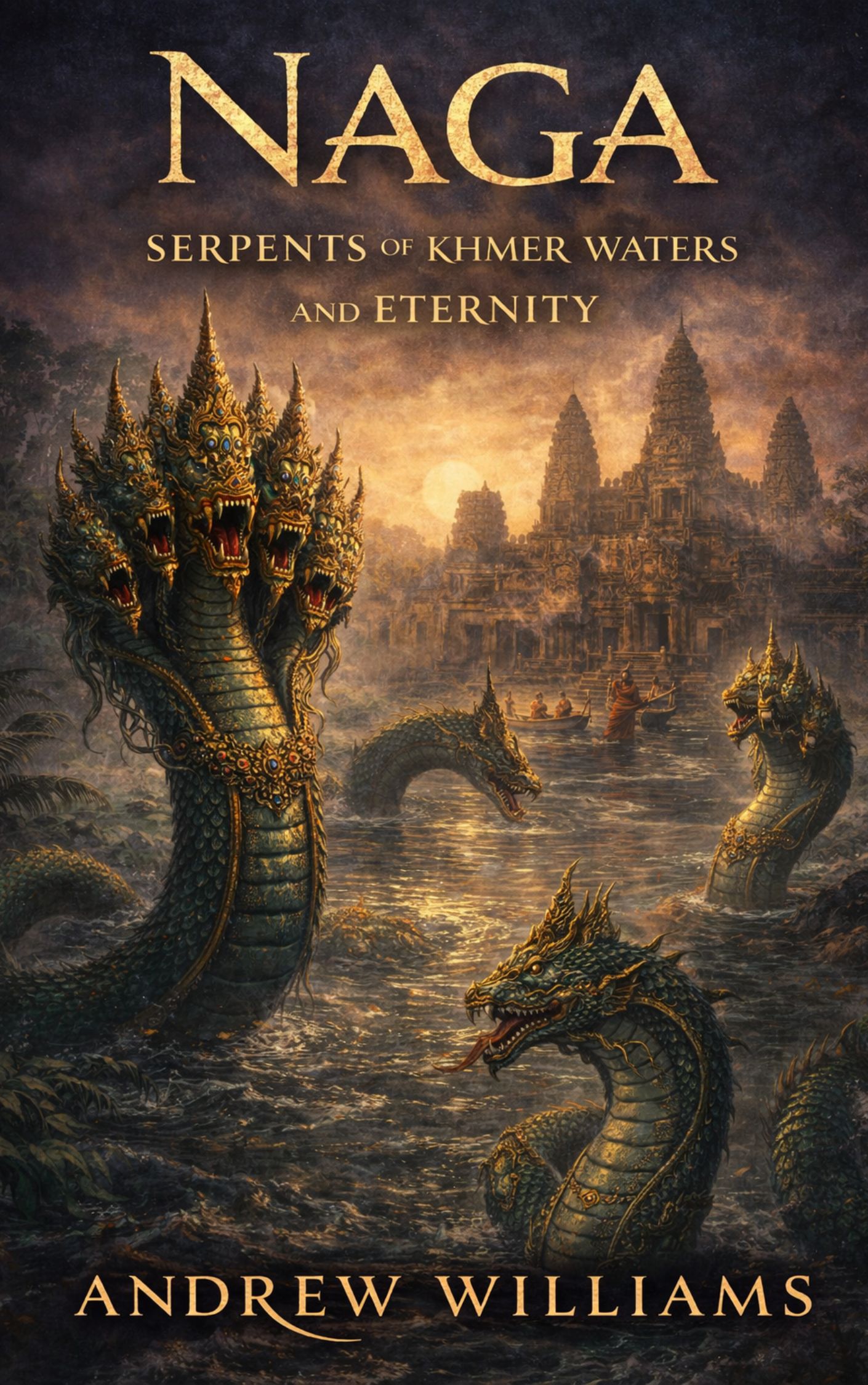
Naga: Serpents of Khmer Waters and Eternity in Cambodian Mythology
Walk across any ancient causeway in Cambodia and you’ll feel it the quiet presence of something ancient, coiled into stone.
Along the bridges of Angkor Wat and the gates of Angkor Thom, massive serpent forms stretch outward, their multiple heads fanned like protective crowns. These are the Naga among the most powerful and enduring symbols in Khmer mythology.
In Cambodian belief, Naga are not simply snakes. They are sacred, multi-headed serpent deities tied to water, fertility, protection, and the unseen spiritual realm known as nagaloka.
They exist between worlds:
- Guardians of rivers and lakes
- Protectors of temples and kings
- Bridges between the human and divine
From ancient stone carvings to modern jewelry and tattoos, Naga remain woven into the identity of Cambodia.
Ancient Origins of Naga in Khmer Mythology and Funan Foundations
The story of Naga in Cambodia begins long before Angkor’s rise.
Scholars trace their origins to early cultural exchanges between India and Southeast Asia during the era of the Funan, when Hindu and Buddhist cosmology merged with indigenous animist beliefs.
Mythological Foundations
| Source Influence | Contribution to Naga Belief |
|---|---|
| Indian Hinduism | Naga as semi-divine serpent beings |
| Buddhism | Protectors of sacred teachings |
| Local animism | Water spirits tied to land and fertility |
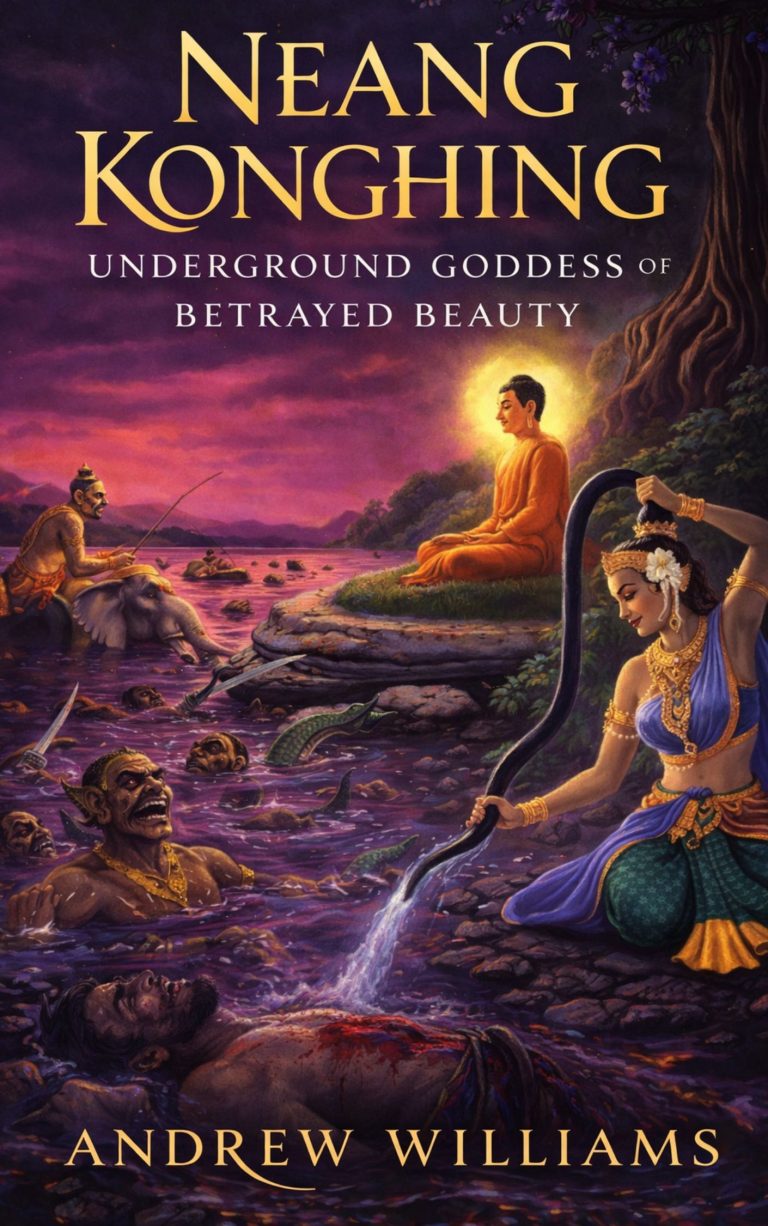
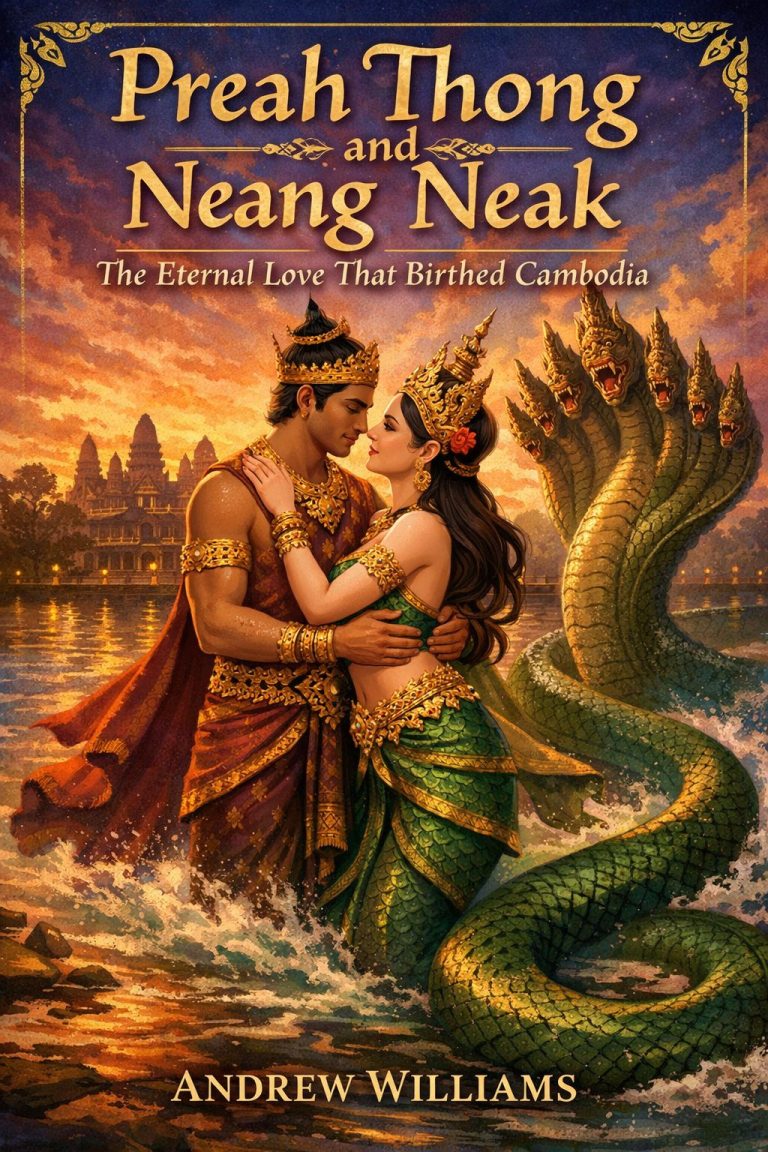
One of the most important myths linking Naga to Cambodia is the legend of Preah Thong and Neang Neak.
According to this creation story, the Naga king father of Neang Neak drank the ocean dry to create land for the couple, effectively forming Cambodia itself.
This myth positions Naga not just as protectors, but as creators of the Khmer world.
Early depictions of Naga can be found at Sambor Prei Kuk, a pre-Angkorian site that predates the grandeur of Angkor and reveals the early integration of serpent symbolism into Khmer architecture.
Iconic Naga Sites: Temples and Rivers Across Cambodia
Naga are everywhere in Cambodia but certain places bring their presence into sharp focus.
Must-See Naga Locations
| Location | Naga Significance |
|---|---|
| Angkor Thom South Gate | Massive Naga balustrades representing cosmic forces |
| Preah Khan | Intricate serpent carvings along temple corridors |
| Phnom Penh Royal Palace | Naga motifs symbolizing royal protection |
| Tonle Sap | Waterways tied to Naga mythology |
| Phnom Kulen | Riverbed carvings linked to sacred water flow |
In Angkor Thom, the famous causeway depicts gods and demons pulling a giant Naga symbolizing the Hindu myth of the Churning of the Ocean of Milk. This scene represents cosmic balance, creation, and the eternal struggle between opposing forces.
Along Tonle Sap, you’ll notice Naga imagery on boat prows, especially in floating villages where water defines daily life. These designs are not decorative they are protective.
Naga Symbolism: Protection, Fertility, and Royal Power in Khmer Art
The deeper you look, the more layers of meaning Naga reveal.
Core Symbolism of Naga
| Symbol | Meaning |
|---|---|
| Multi-headed form | Power and divine authority |
| Coiled body | Protection and containment of energy |
| Water association | Fertility, life, and agriculture |
| Bridge form | Connection between worlds |
In Khmer temple architecture, Naga often appear as balustrades lining bridges and stairways. These are not just structural elements they symbolize a transition from the earthly realm into sacred space.
At temples like Ta Prohm and the Bayon Temple, nine-headed Naga sculptures stand guard, their flared heads forming a protective shield.
In ritual and performance, Naga imagery appears in:
- Apsara dance costumes and gestures
- Jewelry worn during ceremonies
- Traditional tattoos symbolizing protection
Even today, many Cambodians wear Naga-inspired amulets for safety, especially when traveling.
Living Naga Worship: Festivals, Offerings, and Spirit Encounters
Naga are not confined to ancient temples they remain active in Cambodia’s spiritual life.
One of the most visible celebrations of Naga occurs during Bon Om Touk, the annual Water Festival.
Held along rivers in Phnom Penh, the event features long racing boats adorned with Naga heads, symbolizing mastery over water and the blessing of abundance.
Common Naga Ritual Practices
| Ritual | Purpose |
|---|---|
| Offering lotus flowers | Respect and purity |
| Pouring milk or water | Appeasing serpent spirits |
| Lighting incense | Communication with the divine |
| Monk blessings | Protection and prosperity |
In some rural areas, spirit mediums claim to channel Naga energy, offering guidance during ceremonies tied to the lunar calendar.
For expats and travelers, these rituals offer a rare glimpse into living mythology where ancient beliefs continue to shape everyday life.
Naga’s Eternal Legacy: Serpents Shaping Cambodia’s Soul
The story of Naga is, ultimately, the story of Cambodia itself.
In a land shaped by rivers, monsoons, and fertile plains, water is life and the Naga are its guardians.
They represent:
- Balance between nature and humanity
- Protection against chaos and disaster
- The continuity of Khmer culture across centuries
From the ancient stones of Angkor to the flowing waters of Tonle Sap, the presence of Naga is constant.
They are carved into temples, celebrated in festivals, and remembered in myths passed down through generations.
For those exploring Cambodia whether wandering through Angkor’s ruins or watching the Mekong shimmer at sunset the Naga are always there.
Silent. Watchful. Eternal.
And if you pause long enough, you might begin to understand what Cambodians have always known:
The serpents are not just symbols.
They are guardians of a living, breathing world.