Banteay Srei – The Jewel of Angkor with Pink Sandstone Carvings and Ancient Splendor
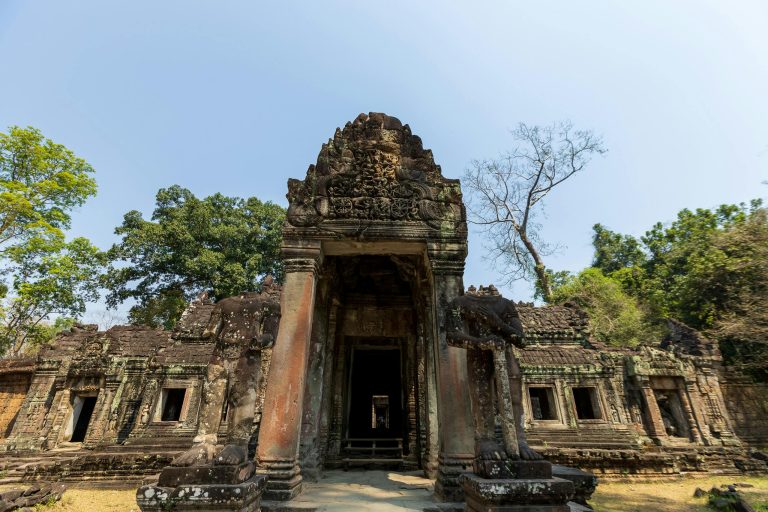
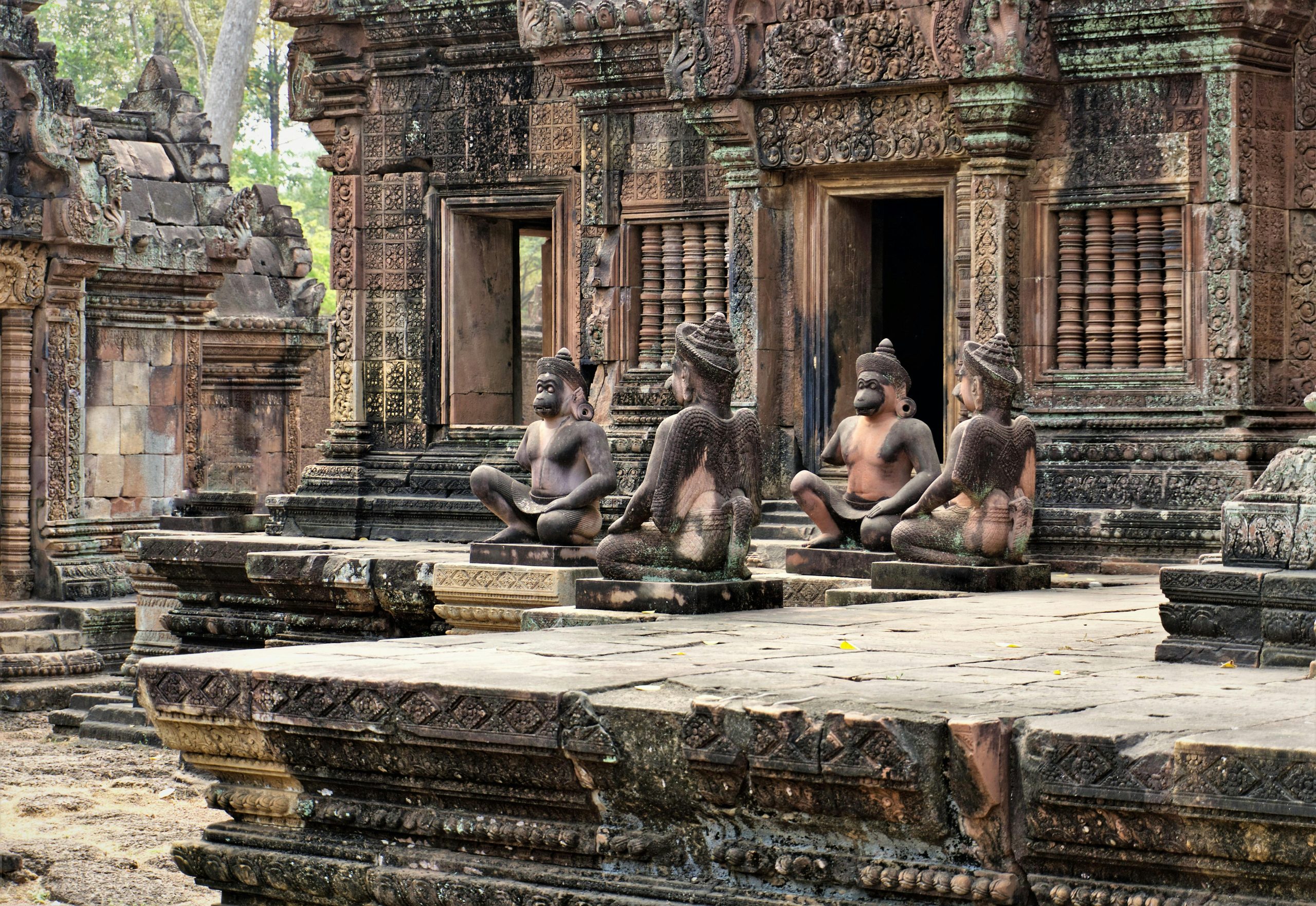
Among the monumental temples of Angkor, Banteay Srei stands apart. Smaller in scale yet unmatched in refinement, it is often described as the jewel of the Khmer Empire. Its delicate pink sandstone carvings are so precise and ornate that they resemble fine jewelry rather than stone reliefs.
Built in the 10th century during the reign of Rajendravarman II, this Hindu sanctuary dedicated to Shiva represents the height of classical Khmer artistry. Located northeast of Siem Reap, Banteay Srei offers a more intimate encounter with Cambodia’s sacred heritage, far from the scale and crowds of Angkor Wat.
For travelers seeking depth over grandeur, this temple delivers one of the most rewarding cultural experiences in Southeast Asia.
History and Cultural Significance
Origins in the Golden Era of the Khmer Empire
Completed around 967 AD, Banteay Srei history begins not with a king, but with a Brahmin scholar named Yajnavaraha. He commissioned the temple as a Shivaite sanctuary during a flourishing period of the Khmer Empire.
Unlike state temples constructed by monarchs, Banteay Srei reflects elite religious patronage and intellectual devotion. Its Sanskrit inscriptions praise Shiva and emphasize royal piety, cosmology, and divine order.
Meaning Behind the Name
The name “Banteay Srei” translates to “Citadel of the Women.” Legend suggests that only women could have carved such refined and delicate details. While symbolic rather than literal, the name highlights the extraordinary finesse of the temple’s ornamentation.
Today, Banteay Srei is part of the UNESCO-listed Angkor Archaeological Park (see official listing: https://whc.unesco.org/en/list/668/). It is widely regarded as a masterpiece of pre-Angkorian architectural evolution and Hindu cosmological symbolism.
Architectural Beauty and Pink Sandstone Glory
Compact Yet Perfectly Proportioned
The Banteay Srei temple layout is symmetrical and harmonious:
- Three central sanctuaries (garbhagrihas)
- Raised platforms
- Two libraries flanking the eastern approach
- Concentric enclosures with gopuras (gate towers)
Its small scale enhances the viewing experience. Visitors can examine carvings up close without craning their necks at towering structures.
Pink Sandstone Angkor Brilliance
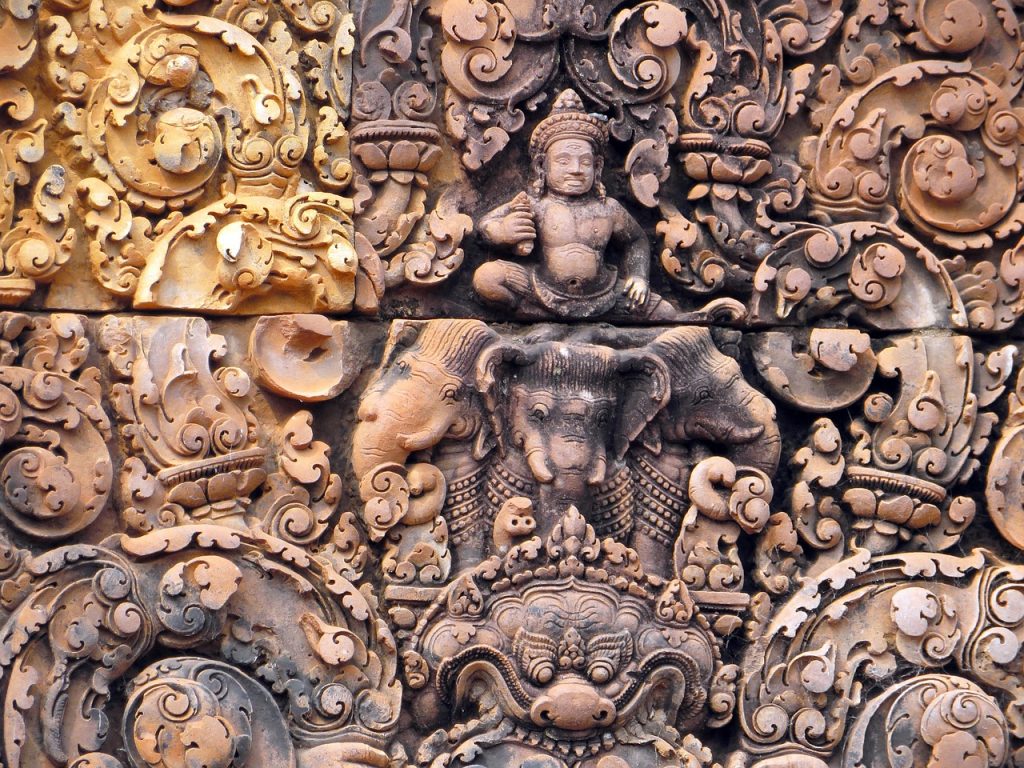
What makes Banteay Srei exceptional is its material: pinkish-red sandstone. Softer than the gray sandstone used at many Angkor temples, it allowed artisans to carve intricate details with extraordinary precision.
At sunrise and sunset, the stone glows warmly, enhancing:
- Floral scrollwork
- Divine figures
- Mythical battle scenes
- Geometric patterns
The temple’s bas-reliefs depict scenes from the Ramayana and other Hindu epics, as well as deities like Shiva and Lakshmi. The clarity and depth of these Banteay Srei carvings remain unmatched across the Angkor complex.
For broader context on Hindu mythology and iconography, Encyclopaedia Britannica provides authoritative background: https://www.britannica.com/topic/Hinduism.
Must-See Features and Carvings
Central Prasat Towers
The three central towers are dedicated to Shiva and once housed sacred lingas. These redented towers showcase some of the finest pediments in Khmer art filled with gods, demons, and celestial narratives carved in astonishing detail.
Libraries
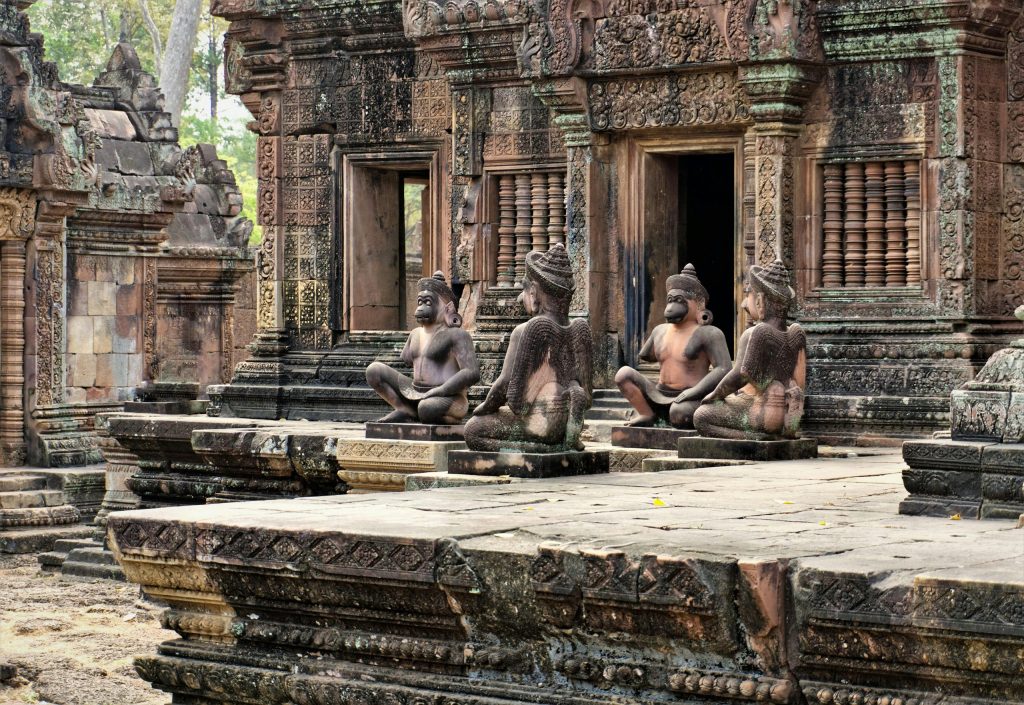
Two freestanding buildings flank the eastern entrance. Guarded by stone lions, these “libraries” feature elaborate friezes and are prime examples of rare Khmer architectural symmetry.
Apsaras Banteay Srei
The apsara carvings here are among the most graceful in Angkor. These celestial dancers appear mid-motion, adorned with elaborate headdresses and jewelry. The realism and fluidity of the Apsaras Banteay Srei figures elevate the temple’s artistic reputation.
Outer Enclosure and Sacred Water Symbolism
The temple’s moat, gopuras, and baray remnants evoke sacred Hindu cosmology:
- The moat symbolizes the cosmic ocean.
- The central towers represent Mount Meru.
- Concentric enclosures reflect layers of the universe.
This sacred geometry reinforces Banteay Srei’s status as a refined Shiva temple Cambodia.
Visiting Banteay Srei: Practical Guide
Location and Access
Banteay Srei lies about 25 kilometers northeast of Siem Reap. The journey takes approximately 30–45 minutes by:
- Tuk-tuk
- Taxi
- Private tour
It can be visited using the standard Angkor Pass, often as part of an extended or small circuit route.
Official ticket details are available via Angkor Enterprise: https://www.angkorenterprise.gov.kh/
Best Time to Visit
- Early morning for soft light and fewer crowds
- Late afternoon for golden-pink sandstone glow
Midday heat can be intense, and shade is limited.
Combine with Nearby Sites
Many travelers pair Visiting Banteay Srei Siem Reap with:
- Kbal Spean (River of a Thousand Lingas)
- Beng Mealea (a jungle-covered Angkor-era temple)
This creates a rewarding full-day cultural excursion.
Practical Advice
- Wear sturdy shoes (uneven steps and narrow pathways).
- Bring water and sun protection.
- Hire a licensed guide to understand the mythological carvings.
For photographers, consider a polarizing filter to enhance the pink hues and sharpen relief details.
Conservation and Modern-Day Allure
In the 1930s, French conservators undertook pioneering restoration at Banteay Srei using the anastylosis technique carefully dismantling and reassembling structures with original materials. This method helped preserve authenticity while stabilizing fragile elements.
Today, the APSARA Authority oversees conservation efforts, balancing visitor access with long-term protection.
Measures include:
- Controlled pathways
- Structural monitoring
- Ongoing erosion management
Unlike busier temples in the Angkor small circuit, Banteay Srei’s slightly remote location provides a quieter, more contemplative atmosphere ideal for detailed observation and photography.
Summary Table: Banteay Srei Highlights and Features
| Feature | Description | Why It’s Special |
|---|---|---|
| Pink Sandstone | Warm-hued stone with fine carvings | Sunset glow and unmatched detail |
| Central Prasats | Triple Shiva shrines | Masterpiece bas-reliefs of Hindu myths |
| Apsara Figures | Dancing celestial nymphs | Exceptional feminine artistry |
| Libraries | Flanking pavilions with lion guardians | Rare and refined Khmer symmetry |
| Moat and Gopuras | Outer enclosure gateways | Sacred cosmology and geometric balance |
Conclusion
Banteay Srei proves that grandeur is not measured in size alone. Its petite scale conceals monumental artistry intricate pink sandstone Angkor carvings, sacred Shiva shrines, and apsaras captured in eternal motion.
For travelers seeking deeper insight into Khmer craftsmanship and Hindu symbolism, Banteay Srei offers a profound and intimate encounter with Cambodia’s ancient devotion. Away from Angkor’s largest crowds, it stands as a testament to precision, beauty, and spiritual sophistication etched permanently in stone.
A journey to Banteay Srei is not simply sightseeing it is an immersion into the finest expression of classical Khmer art.