Baksei Chamkrong Temple: Hidden Pyramid Jewel Near Angkor Thom
The first time I clambered up the steep staircase of Baksei Chamkrong, my palms were dusty with laterite grit and my heart was racing not from fear, but from the view. The jungle canopy parted just enough to reveal the stone causeway of Angkor’s southern approach, and the fading light turned the bricks a deep amber. Below, tuk-tuks buzzed toward the gates; above, silence reigned.
Meaning “arms of iron,” Baksei Chamkrong temple is a compact 10th-century pyramid shrine dedicated to Shiva. It stands just south of Phnom Bakheng in Siem Reap, guarding the southern approach to the Angkor complex. Its tiny footprint belies its symbolic weight. As a guardian shrine at the threshold of the Angkor Archaeological Park, it once embodied both royal devotion and cosmic protection.
For digital nomads, historians, and slow travelers who crave Khmer Empire authenticity without the crowds of Angkor Wat, Baksei Chamkrong Angkor offers a distilled experience: steep, raw, and profoundly atmospheric.
The Story Behind Baksei Chamkrong Temple and King Harshavarman I

The Baksei Chamkrong temple was constructed between approximately 900 and 923 AD during the early Angkor period. It is attributed to Harshavarman I, who ruled after his father, Yasovarman I. The temple’s Sanskrit inscription, carved on its doorjambs, links it directly to the royal lineage and the consolidation of power around Angkor.
At its summit once stood a massive Shiva lingam an aniconic representation of the Hindu god Shiva and a core symbol in Shaivite worship. The temple’s name, “arms of iron,” stems from a legend in which divine arms shielded the king from a violent storm. In the cosmology of the Khmer Empire, this was no mere metaphor; it was a statement of divine kingship and celestial mandate.
Baksei Chamkrong Cambodia also serves as a precursor to grander temple mountains like Phnom Bakheng. It reflects the architectural experimentation that would culminate in Angkor’s monumental state temples. This period also overlaps with shifting political centers, including the move toward Koh Ker under Jayavarman IV an episode well documented by the UNESCO and researchers of Southeast Asian archaeology.
Just 400 meters north stands the South Gate of Angkor Thom, later built under Jayavarman VII. Nearby sites such as the Terrace of the Leper King reflect the evolution from Hindu to Mahayana Buddhist iconography, underscoring Baksei Chamkrong’s place in a shifting religious landscape.
For deeper historical context on Angkor’s chronology and royal lineages, the APSARA National Authority provides authoritative resources on temple conservation and research.
Architecture Highlights of Baksei Chamkrong: Steep Pyramid and Carved Splendor
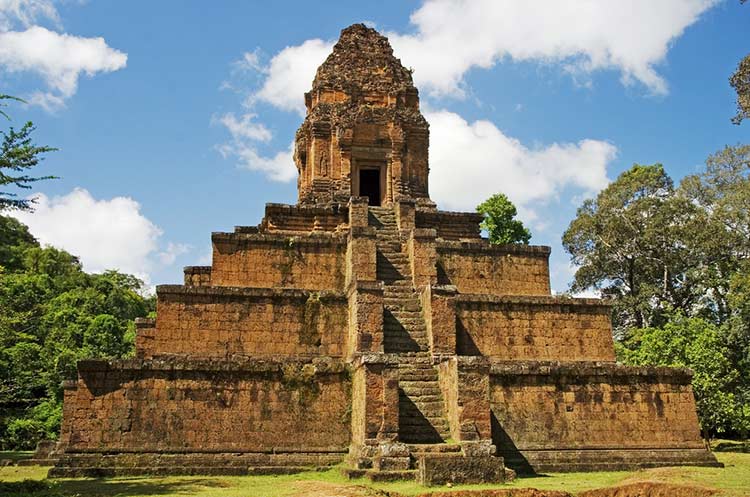
Architecturally, Baksei Chamkrong temple is a classic early Angkorian pyramid a seven-tiered laterite base rising sharply to a single sandstone sanctuary tower.
Structural Overview
| Feature | Description | Material | Symbolism |
|---|---|---|---|
| Pyramid Base | Seven diminishing tiers | Laterite | Mount Meru (cosmic mountain) |
| Central Tower | Single sanctuary (prasat) | Sandstone & brick | Abode of Shiva |
| Staircase | Extremely steep eastern approach | Laterite steps | Spiritual ascent |
| False Doors | Decorative blind portals | Sandstone | Ritual symmetry |
The laterite core provides durability against Siem Reap’s monsoon cycles, while sandstone allows for refined bas-reliefs. The doorway lintels depict Indra riding Airavata, framed by swirling vegetal motifs. Garuda figures serve as brackets, reinforcing the Hindu cosmology embedded in every inch of the shrine.
Corbelled arches, antefixes, and intricate pediments demonstrate the craftsmanship that would later reach zenith expression in Angkor Wat. Yet here, erosion tells its own story. Centuries of tropical rain have softened carvings, giving the temple a weathered authenticity that feels intimate rather than monumental.
Unlike larger temple mountains, Baksei Chamkrong’s narrow stairs demand careful footing. The climb is short but intense a visceral reminder that sacred architecture in the Khmer Empire was meant to elevate both body and spirit.
Visiting Baksei Chamkrong Temple: Easy Access from Siem Reap
One of Baksei Chamkrong Angkor’s greatest advantages is its accessibility. Located just south of the South Gate of Angkor Thom, it’s a 10-minute ride from central Siem Reap by tuk-tuk or bicycle.
Practical Details
- Distance from Angkor Thom South Gate: ~400 meters
- Exploration time: 10–15 minutes
- Entry: Covered by the Angkor Pass
- Best season: Dry season (November–April)
Many travelers pair Baksei Chamkrong with a sunset climb at Phnom Bakheng. While the latter draws large crowds, Baksei Chamkrong remains comparatively tranquil. Early mornings are ideal for avoiding heat and capturing soft light on the brickwork.
Traveler Tips:
- Wear sturdy shoes; steps are uneven and steep.
- Carry water shade is limited.
- Binoculars enhance distant views of Angkor Thom’s moat.
- Drones are restricted within the protected Angkor zone per APSARA guidelines.
Baksei Chamkrong vs. Phnom Bakheng: Why This Tiny Temple Packs a Punch
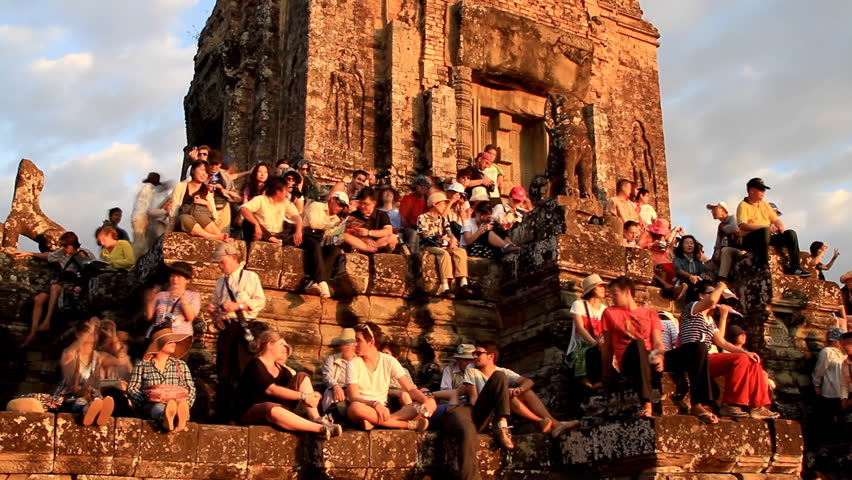
While Phnom Bakheng dominates sunset itineraries, Baksei Chamkrong temple offers a different energy.
| Aspect | Baksei Chamkrong | Phnom Bakheng |
|---|---|---|
| Crowd Levels | Low to moderate | High at sunset |
| Climb Intensity | Short, steep | Longer, gradual |
| Atmosphere | Raw, intimate | Expansive, social |
| Spiritual Feel | Quiet Shiva shrine | State temple mountain |
The smaller scale fosters introspection. Standing where the Shiva lingam once rose, you sense the vertical symbolism: Mount Meru recreated in brick and stone. The temple feels less curated, more elemental.
Preservation efforts by French scholars of the École française d’Extrême-Orient (EFEO) in the early 20th century stabilized its structure, while ongoing conservation by APSARA ensures it remains safe and accessible within this UNESCO World Heritage site.
Symbolically, Baksei Chamkrong once guarded the southern approach toward Angkor Wat and the royal city beyond. Its “iron arms” were not merely myth they represented cosmic protection over the empire’s sacred geography.
Top Spots and Secrets at Baksei Chamkrong Temple for Photo Hunters
Despite its modest size, Baksei Chamkrong Cambodia rewards attentive explorers.
Prime Photo Angles
- Summit panorama: Capture the forest canopy and hints of Angkor Thom’s causeway.
- Eastern staircase: Emphasizes the temple’s dramatic incline.
- Base carvings: Look for eroded elephants and naga motifs.
- Jungle textures: Vines clinging to laterite blocks create compelling contrast.
Southern Angkor Loop Idea
Combine Baksei Chamkrong with:
- Preah Palilay
- Victory Gate
This route offers a quieter counterpoint to Angkor Wat and Bayon-heavy itineraries, highlighting transitional architecture and forest-wrapped ruins.
Baksei Chamkrong’s Enduring Allure in Cambodia’s Ancient Landscape
Baksei Chamkrong temple may be small, but it encapsulates the ambition of the early Khmer Empire. It reflects a moment when Angkor’s rulers were refining the temple-mountain concept aligning architecture, religion, and kingship into a unified cosmological statement.
In an era where travelers often rush from icon to icon, Baksei Chamkrong Angkor invites pause. Its steep ascent, solitary tower, and weathered carvings evoke a Cambodia that feels intimate and elemental.
If you’re exploring Siem Reap’s Angkor complex, make time for this must-climb shrine. Grab your Angkor Pass, venture beyond the icons, and let the “arms of iron” remind you that even the smallest temples can carry the weight of an empire.
For updated visitor regulations and conservation insights, consult the official APSARA National Authority resources or UNESCO’s World Heritage listing for Angkor.
Baksei Chamkrong Cambodia isn’t just a stop on the map it’s a vertical slice of Khmer ingenuity, quietly guarding the southern threshold of one of the world’s greatest archaeological landscapes.