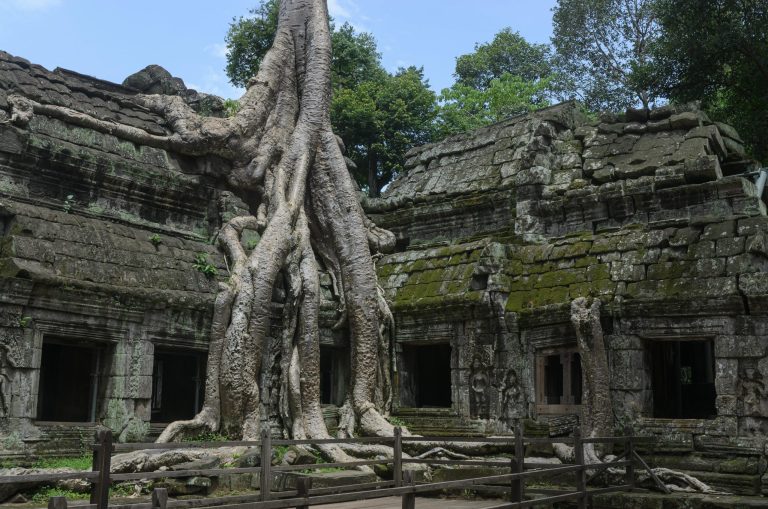
Angkor Thom – Exploring the Ancient Khmer Capital and Its Majestic Ruins
Rising from the forests of northwestern Cambodia, Angkor Thom Cambodia represents the architectural and spiritual climax of the Khmer Empire. Built in the late 12th century by Jayavarman VII, this vast walled city became the empire’s final and most ambitious capital.
Covering nearly 10 square kilometers, Angkor Thom is more than a temple complex. It is a carefully designed cosmological city, layered with symbolism from Hindu and Mahayana Buddhist traditions. Massive stone faces gaze serenely from its towers, while intricate bas-reliefs narrate epics, royal processions, and scenes of everyday Khmer life.
Today, as part of the UNESCO World Heritage–listed Angkor Archaeological Park (see UNESCO’s official overview at https://whc.unesco.org/en/list/668/), Angkor Thom draws historians, architects, photographers, and spiritual travelers seeking a direct encounter with Cambodia’s golden age.
History and Construction of Angkor Thom
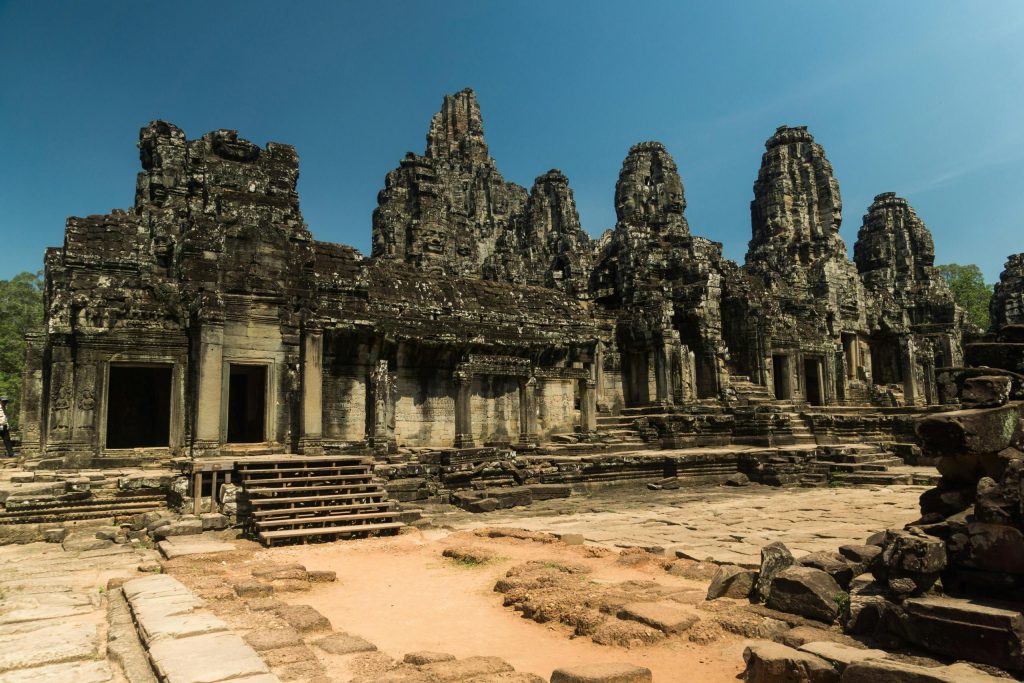
The story of Angkor Thom history begins with crisis and resilience. In 1177, the Cham kingdom invaded and sacked Angkor. When Jayavarman VII reclaimed power, he initiated one of the most ambitious urban projects in Southeast Asian history: a fortified capital designed to reflect both divine order and imperial authority.
A Cosmic Blueprint
Angkor Thom was conceived as a symbolic model of the universe:
- The city walls represent the mountains encircling the world.
- The moat signifies the cosmic ocean.
- The central temple, Bayon, symbolizes Mount Meru, the mythical axis of the cosmos in Hindu-Buddhist cosmology.
This cosmological alignment mirrors earlier Khmer masterpieces like Angkor Wat, yet Angkor Thom expresses a distinctly Mahayana Buddhist ideology centered on compassion and divine kingship.
Engineering Mastery
The city’s construction required:
- Massive sandstone blocks quarried from the Kulen Mountains
- Sophisticated hydraulic systems
- A 12-kilometer defensive wall
- A wide moat measuring approximately 100 meters across
The precision of the carvings and structural alignment still fascinates archaeologists today. For broader historical context on the Khmer civilization, Encyclopaedia Britannica offers a detailed overview: https://www.britannica.com/place/Khmer-Empire.
Angkor Thom remained the Khmer Empire capital until the 15th century, when political shifts and regional pressures led to its gradual decline.
The Majestic Gates of Angkor Thom
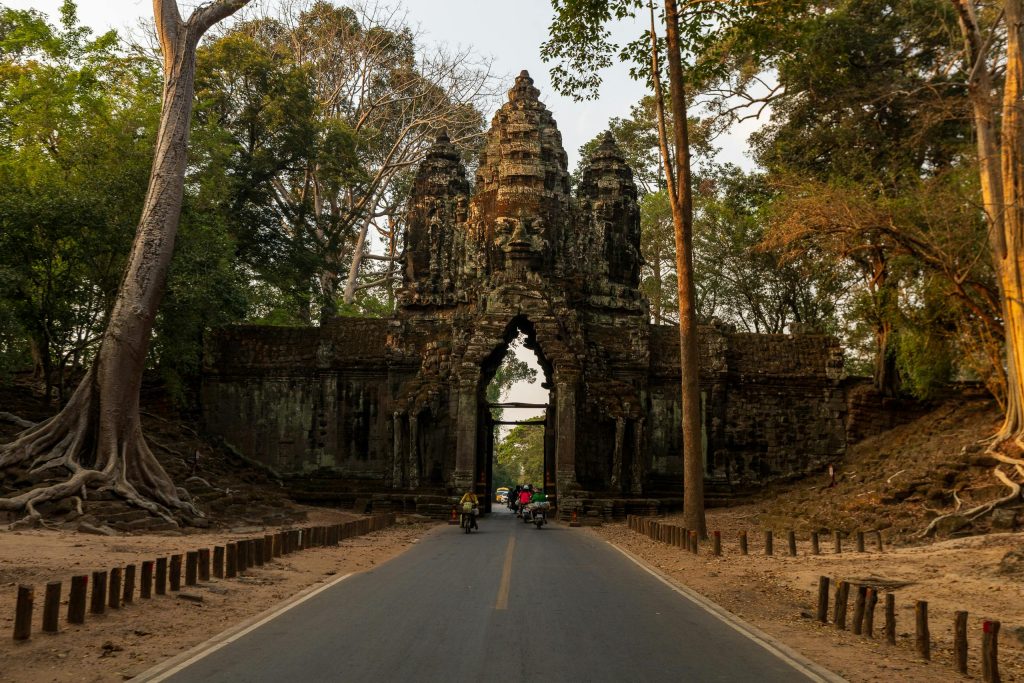
Five monumental gateways pierce the fortified walls of Angkor Thom. These Angkor Thom gates are among the most photographed entrances in Southeast Asia.
South Gate of Angkor Thom
Victory Gate
Death Gate
Each gate features:
- Four colossal stone faces oriented toward the cardinal directions
- Naga balustrades held by rows of gods and demons
- Towering laterite and sandstone construction
The faces are widely believed to represent Avalokiteshvara, the Bodhisattva of Compassion—though some scholars argue they may also reflect the king himself.
Symbolism and Processions
- Victory Gate was used for royal military processions.
- Death Gate symbolized ritual and spiritual transitions.
- The South Gate offers the most dramatic approach and is the preferred entry for most visitors today.
The combination of mythological symbolism and political messaging makes these gates both defensive structures and monumental declarations of power.
Bayon Temple: Heart of Angkor Thom
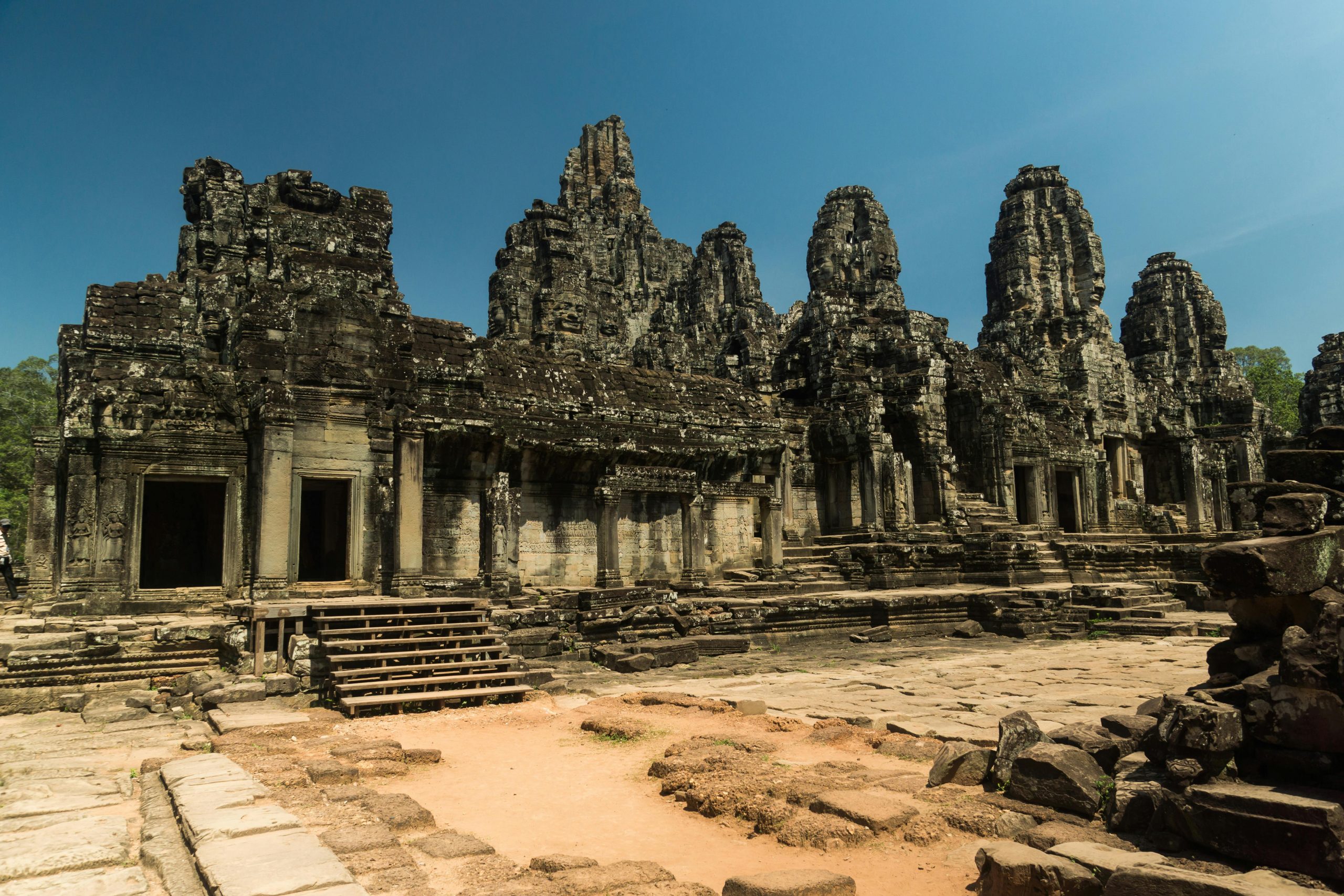
At the very center of Angkor Thom stands Bayon, the spiritual and symbolic core of the city.
The Enigmatic Faces
Bayon is famous for its 216 smiling stone faces, carved atop 54 towers. These serene expressions, known globally as the Bayon Temple faces, gaze in all directions, creating an immersive and almost hypnotic atmosphere.
The subtle smile, closed lips, and meditative gaze evoke compassion and divine watchfulness hallmarks of Mahayana Buddhist philosophy under Jayavarman VII Angkor.
Bas-Reliefs of Daily Life
Unlike many temple carvings that focus solely on mythology, Bayon’s lower galleries depict:
- Naval battles against the Chams
- Market scenes
- Fishermen and traders
- Royal ceremonies
- Mythical creatures and celestial beings
These reliefs provide rare visual documentation of 12th-century Khmer society, rivaling the narrative richness of Angkor Wat.
Climbing Bayon’s upper terraces rewards visitors with panoramic jungle views and close encounters with the weathered faces an unforgettable highlight of visiting Angkor Thom.
Key Structures Within Angkor Thom Walls
Beyond Bayon, several major monuments define the inner city’s grandeur.
Baphuon
Originally a 10th-century Hindu temple-mountain, Baphuon was later transformed into a massive reclining Vishnu. The Baphuon Temple restoration completed in the 21st century was one of the most complex archaeological reconstruction projects in the world, often described as a three-dimensional puzzle.
Phimeanakas
Situated within the former royal palace enclosure, Phimeanakas is linked to legends of a naga queen who would visit the king nightly to ensure prosperity. The Phimeanakas royal palace complex once formed the ceremonial heart of imperial governance.
Terrace of the Elephants
This long viewing platform served as a grandstand for royal ceremonies and military parades. Its life-sized elephant carvings stretch across the facade, giving the terrace its iconic name.
Terrace of the Leper King
Named after a later legend associated with Jayavarman II, this multi-layered terrace features intricate carvings of nagas, demons, and celestial beings. Its hidden interior walls reveal some of the most detailed stonework in Angkor.
Practical Tips for Visiting Angkor Thom
To make the most of your experience, consider these visiting Angkor Thom tips:
Best Entry Point
- Enter through the South Gate for the classic, photogenic approach.
Timing
- Arrive early (before 8 AM) to avoid crowds and midday heat.
- Late afternoon offers softer lighting for photography.
Tickets
- A 1-day, 3-day, or 7-day Angkor Pass grants access to Angkor Thom and surrounding temples.
- Official ticket information is available via the Angkor Enterprise website: https://www.angkorenterprise.gov.kh/
Transportation
- Tuk-tuks (remorks) are efficient for covering large distances inside the park.
- Cycling is possible but challenging in the heat.
Temple Etiquette
- Cover shoulders and knees.
- Avoid climbing restricted areas.
- Hire licensed guides for deeper historical interpretation.
Summary Table: Angkor Thom Highlights and Features
| Feature | Description | Must-See Elements |
|---|---|---|
| South Gate | Iconic entry with four giant faces | Naga balustrades, guardian gods |
| Bayon Temple | Central pyramid with 216 smiling faces | Bas-reliefs of Khmer life and myths |
| Terrace of the Elephants | Royal parade platform | Carved elephants, Royal Square |
| Baphuon | Reclining Vishnu temple-mountain | Restored pyramid views |
| Phimeanakas | Royal palace temple | Naga queen legends |
Conclusion
From its cosmic urban planning to its serene stone faces, Angkor Thom embodies the ambition, artistry, and spiritual vision of the Khmer Empire.
The monumental Angkor Thom gates, the mesmerizing Bayon Temple faces, and the grandeur of the Terrace of the Elephants reveal a civilization at its peak. Whether you are a historian, architect, photographer, or cultural traveler, this ancient capital offers layers of discovery at every turn.
Plan your journey to this UNESCO World Heritage treasure and experience firsthand the enduring legacy of Cambodia’s imperial past.