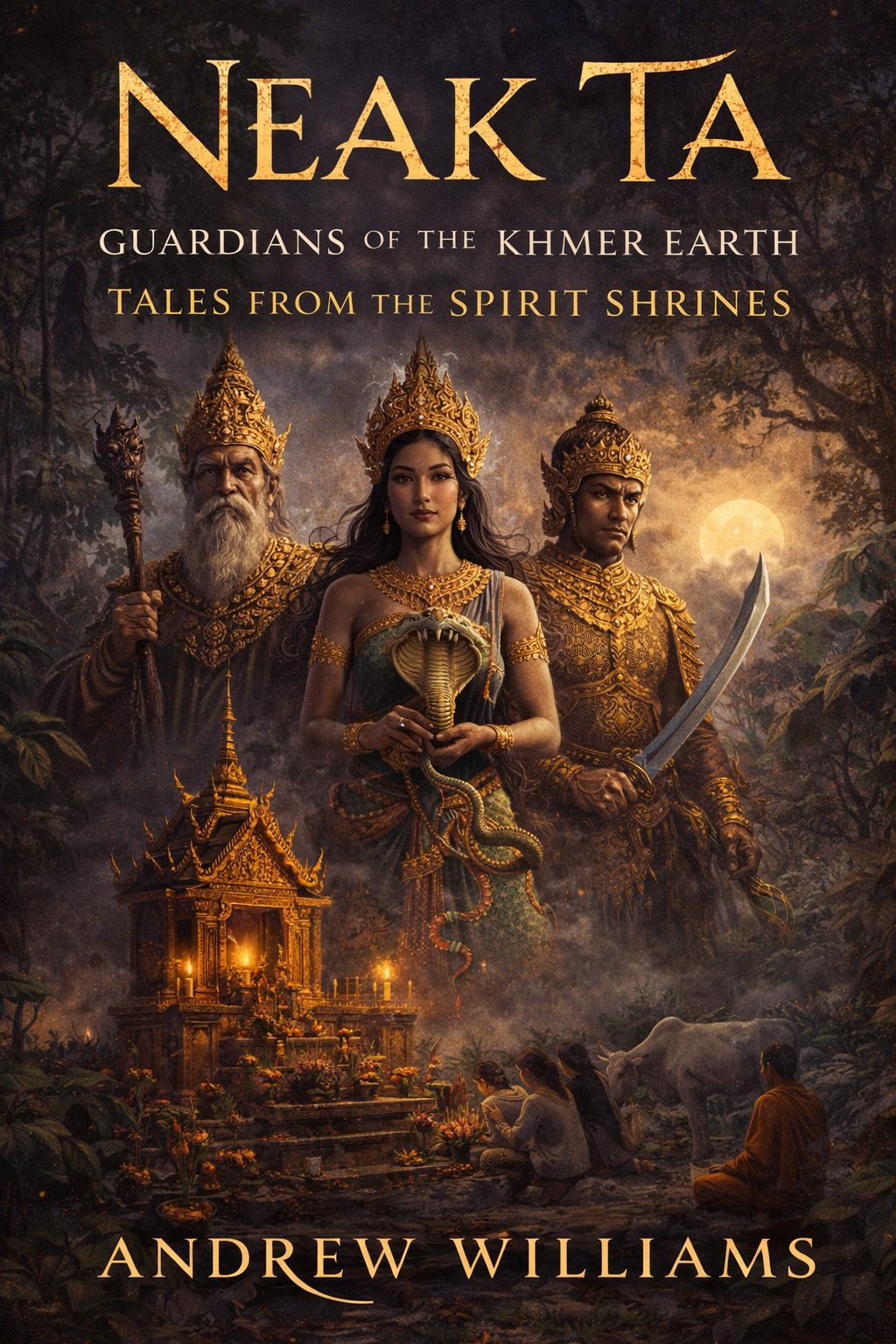
Neak Ta: Guardians of the Khmer Earth – Sacred Tales from Cambodia’s Spirit Shrines
If you spend enough time in Cambodia, you begin to notice them everywhere.
A small concrete altar under a banyan tree. A weathered shrine beside a rice field. Bottles of bright red soda lined up like offerings at a roadside stop.
These are homes for the Neak Ta Cambodia’s deeply rooted guardian spirits, quietly woven into the fabric of daily life.
The term “Neak Ta” roughly translates to “ancestor lord” or “local protector.” Unlike distant gods or abstract deities, Neak Ta are hyper-local. They belong to a specific tree, a stretch of land, a village, or even a crossroads.
They are not just believed in they are consulted.
Farmers ask for rain. Shop owners request protection. Travelers whisper quick prayers before long journeys. In a country where Buddhism coexists with older animist traditions, Neak Ta form the invisible layer that binds land, memory, and spirit.

Ancient Roots of Neak Ta Guardians in Khmer Folklore
The origins of Neak Ta Cambodia trace back centuries long before the rise of Angkor.
These spirits likely emerged from early Southeast Asian animist beliefs, where natural elements such as forests, rivers, and mountains were thought to house powerful entities.
Over time, these spirits evolved.
Evolution of Neak Ta Beliefs
| Era | Transformation |
|---|---|
| Prehistoric animism | Spirits tied to land, trees, and water |
| Funan period | Ancestors and local leaders deified |
| Angkor era | Integrated into Hindu-Buddhist cosmology |
| Modern Cambodia | Spirits of heroes, monks, or tragic figures |
Sites like Preah Ko reflect early connections between ancestor worship and temple culture. Even today, certain Angkorian ruins are believed to house Neak Ta spirits guarding sacred ground.
Neak Ta are not passive figures. In Khmer belief, they possess real agency:
- Blessing crops and ensuring rainfall
- Protecting villages from illness
- Punishing disrespect or moral wrongdoing
- Communicating through dreams or spirit possession
Their shrines often reveal their personality.
Anatomy of a Neak Ta Shrine
| Element | Meaning |
|---|---|
| Incense sticks | Communication with the spirit |
| Offerings (fruit, soda, alcohol) | Gifts to gain favor |
| Mirrors | Reflect spiritual energy |
| Photographs/statues | Representation of the spirit |
| Cigarettes | Personal offerings reflecting human traits |
These details make each shrine feel intimate less like a temple, more like a relationship.
Must-Visit Neak Ta Shrines: Journeys Across Cambodia’s Landscape
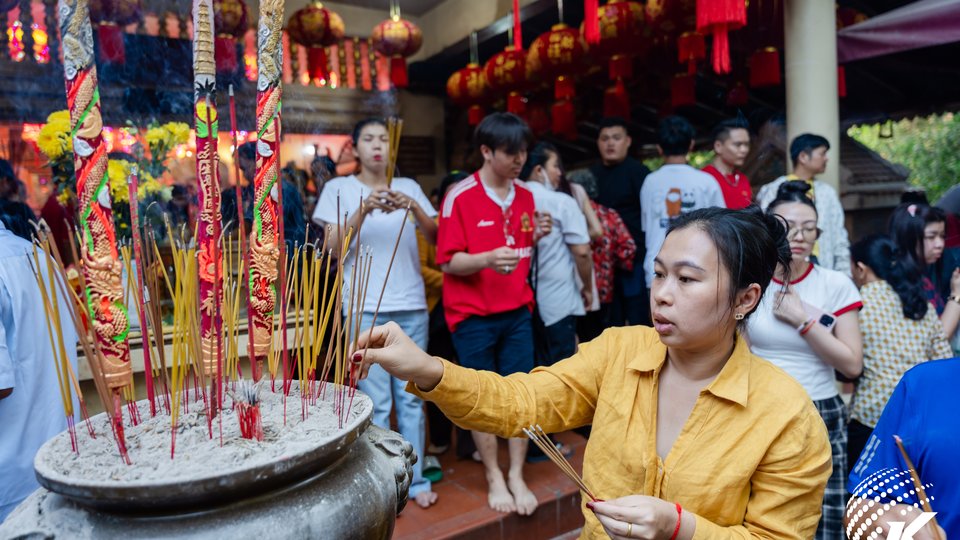
To understand Neak Ta fully, you have to encounter them in the wild across Cambodia’s varied landscapes.
Notable Neak Ta Locations
| Region | Shrine Experience |
|---|---|
| Siem Reap | Tree shrines near temples and hidden altars around Angkor Wat |
| Phnom Penh | Urban shrines near markets and intersections |
| Battambang countryside | Roadside altars and rural guardian spirits |
| Mondulkiri | Jungle shrines near waterfalls and forests |
| Ratanakiri | Remote volcanic landscapes with powerful local spirits |
In Siem Reap, some of the most intriguing Neak Ta shrines are tucked beside ancient trees within temple complexes. Locals still leave offerings there, even in UNESCO-protected zones.
In Phnom Penh, you’ll find shrines wedged between buildings or beside busy roads evidence that modern life hasn’t erased ancient beliefs.
Out in Battambang’s countryside, Neak Ta feel closest to their origins. Here, shrines often stand alone in fields, guarding land that has been cultivated for generations.
Honoring Neak Ta: Rituals, Offerings, and Possession Ceremonies
Interacting with a Neak Ta is not casual it follows unwritten rules passed down through generations.
Basic Ritual Etiquette
| Action | Purpose |
|---|---|
| Clap three times | Announce your presence |
| Light incense | Open communication |
| Speak your request clearly | Show respect and intention |
| Leave offerings | Build reciprocity |
Offerings vary depending on the request:
- Red soda (especially Fanta)
- Fresh fruit
- Rice wine or beer
- Incense and candles
In more elaborate ceremonies, spirit mediums act as vessels for Neak Ta.
Possession Ceremonies
During these rituals:
- A medium enters a trance-like state
- The Neak Ta is believed to speak through them
- Advice, warnings, or blessings are delivered
These ceremonies often feel intense part spiritual consultation, part theatrical performance.
They are especially common during major festivals like:
However, there are taboos:
- Never step on or touch a shrine casually
- Avoid disrespectful behavior nearby
- Follow local customs when invited to participate
Neak Ta in Contemporary Cambodia: From Farmers to Expats
Despite rapid modernization, Neak Ta remain deeply relevant in Cambodia today.
Everyday Influence
| Situation | Neak Ta Role |
|---|---|
| Farming | Ensuring rain and crop success |
| Travel | Protection on dangerous roads |
| Business | Blessings for prosperity |
| Health | Spiritual healing and guidance |
In Phnom Penh, it’s common to see drivers pause briefly at roadside shrines before continuing their journey.
In Siem Reap, some expats even digital nomads quietly adopt local customs, placing small offerings at neighborhood shrines for luck or protection.
Institutions like the APSARA National Authority carefully balance preservation and tradition, ensuring that spiritual practices continue respectfully within protected heritage sites.
Meanwhile, Cambodian pop culture has embraced Neak Ta in new ways:
- Viral social media videos of possession ceremonies
- Appearances in Khmer horror films
- Local storytelling podcasts and YouTube channels
The spirits have adapted to the modern world without losing their essence.
Eternal Watch of Neak Ta: Anchors of Khmer Resilience
At their core, Neak Ta represent something fundamental: the relationship between people and place.
They are guardians not just of land, but of memory, identity, and continuity.
In a country shaped by history from the grandeur of Angkor to the hardships of the 20th century these spirits provide a sense of stability.
They remind Cambodians that:
- The land is alive
- Actions have consequences
- Respect sustains harmony
For travelers and expats, engaging with Neak Ta offers more than cultural insight. It opens a doorway into Cambodia’s spiritual worldview one where the past is never truly gone, and the unseen is always near.
So next time you pass a small shrine under a tree or beside a quiet road, pause for a moment.
Look closer.
Because in Cambodia, the earth is never empty.
And the Neak Ta are always watching.