Tum Teav: Whispers of Forbidden Love in Cambodia’s Pagoda Shadows
Across Cambodia, ancient pagodas and quiet rice fields carry echoes of a tragic love story that has haunted Khmer culture for generations. Known simply as Tum Teav, this legendary tale of forbidden romance between a monk and a village maiden has become one of the most influential works in Cambodian literature.
Often compared to Romeo and Juliet, the story of Tum and Teav blends romance, social tension, religious tradition, and devastating fate. But unlike Shakespeare’s Verona, the stage for this drama unfolds in Cambodia’s pagodas, villages, and royal courts.
For centuries, the Tum Teav story has been passed down through poetry, theater, and oral storytelling. Today it remains a cornerstone of Khmer folklore retold in films, classical performances, and temple murals throughout Cambodia.

The Heart-Wrenching Tale of Tum Teav: Cambodia’s Romeo and Juliet
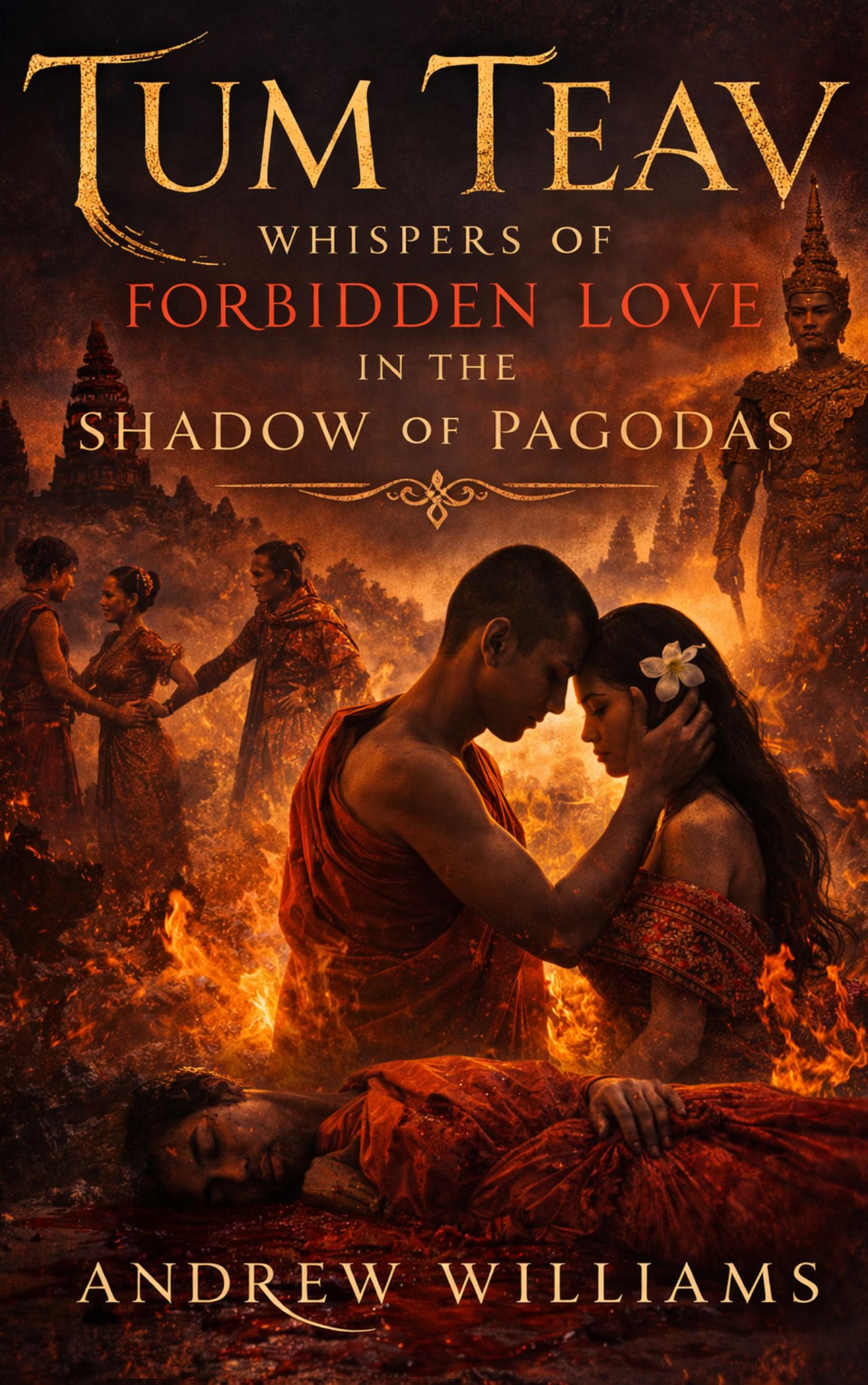
At the center of the Tum Teav Cambodia legend are two lovers whose devotion defies the rigid social structures of their time.
Tum, a young monk and talented student, travels the countryside reciting poetry and religious teachings. His voice and charm capture the attention of villagers everywhere he goes.
Teav, a beautiful young woman from a respected family, lives under the strict expectations of society and family honor.
When their paths cross near Svay Chhrak Pagoda, their lives change forever.
Their love grows quickly but it is forbidden.
Tum has taken monastic vows, while Teav’s family has promised her to a powerful local governor. The relationship becomes a scandal that threatens religious order and social hierarchy.
The tragic consequences of their passion would eventually cement Tum Teav as Cambodia’s most enduring love story.
Origins of Tum Teav: From Folk Legend to Khmer Literary Masterpiece
The story of Tum Teav likely originated as an oral legend told in villages across Cambodia. By the mid-19th century, it was transformed into a written epic poem by the Khmer poet Ukñā Pen.
Scholars estimate the poem was written around 1850, drawing inspiration from events said to have occurred in the region around Kampong Cham.
The narrative is set during the reign of King Ang Duong, a period when Cambodia was rebuilding its cultural identity after centuries of political turmoil following the decline of the Khmer Empire.
Before becoming a literary work, Tum Teav circulated through:
- Monk recitations at Buddhist temples
- Folk storytelling in village gatherings
- Shadow puppet theater (Sbek Thom)
- Traditional dance drama
The UNESCO recognizes Cambodia’s classical performance traditions as key elements of the nation’s intangible cultural heritage, many of which continue to retell stories like Tum Teav.
Characters That Haunt: Tum, Teav, and the Cruel Hand of Fate
The power of the Tum Teav story lies in its unforgettable characters. Each one embodies elements of Khmer society, morality, and tragedy.
Main Characters in Tum Teav
| Character | Role | Symbolism |
|---|---|---|
| Tum | Monk and poet | Passion, rebellion, youthful devotion |
| Teav | Village maiden | Innocence, loyalty, sacrifice |
| Governor Noch | Teav’s suitor | Authority and corruption |
| Teav’s Mother | Protective parent | Social pressure and tradition |
| The King | Final judge | Justice and fate |
Tum is portrayed as a gifted scholar whose poetry reflects deep emotion and idealism. His love letters to Teav become some of the most famous passages in Khmer literature.
Teav, meanwhile, represents loyalty and virtue. Despite pressure from her family and society, she refuses to abandon her love for Tum.
Opposing them is the powerful governor Noch, whose desire to marry Teav reflects the rigid class hierarchy of the era.
Together, these characters create a moral drama that explores themes of duty, honor, and personal freedom.
Plot Twists in Tum Teav: Passion, Betrayal, and Pagoda Heartbreak
The Tum Teav story unfolds through a series of emotional and dramatic events that ultimately lead to devastating tragedy.
Key Events in the Tum Teav Plot
| Story Stage | Event |
|---|---|
| First Meeting | Tum encounters Teav near Svay Chhrak Pagoda |
| Secret Romance | The pair exchange poetry and vows of love |
| Social Pressure | Teav is promised to Governor Noch |
| Forced Marriage | Teav is compelled to accept the arrangement |
| Tum’s Return | Tum attempts to reclaim his beloved |
| Violent Conflict | The governor orders Tum executed |
| Royal Intervention | The king learns of the injustice—but too late |
In some versions of the legend, Teav takes her own life upon learning of Tum’s death. In others, both lovers die as victims of cruelty and corruption.
The king, upon discovering the injustice, punishes those responsible but the lovers are already gone.
Local folklore claims that the spirits of Tum and Teav still wander the grounds of Svay Chhrak Pagoda, turning the site into a symbolic pilgrimage for lovers and literature enthusiasts.
Tum Teav in Cambodian Culture: Films, Festivals, and Modern Echoes
Few works of Cambodian literature have had the cultural impact of Tum Teav.
Over the decades, the story has been adapted into:
- Classical dance dramas
- Stage theater productions
- Radio storytelling series
- Cambodian cinema
One of the most famous adaptations was the 1969 Cambodian film version, which helped introduce the story to modern audiences.
In Phnom Penh, murals depicting scenes from the legend can be found inside several Buddhist temples.
During Khmer New Year, traditional performances sometimes reenact famous moments from the epic poem.
The story also attracts literary travelers curious to visit locations associated with the legend, particularly in Takeo Province, where Svay Chhrak Pagoda stands.
Legacy of Tum Teav: Eternal Lessons from Khmer Forbidden Love
The legend of Tum Teav endures not simply because of its tragic ending, but because of the universal themes it explores.
Lessons from the Tum Teav Story
| Theme | Meaning |
|---|---|
| Forbidden love | Personal desire versus social duty |
| Moral justice | Abuse of power eventually punished |
| Loyalty | Devotion even in the face of death |
| Cultural identity | Reflection of Khmer social values |
For Cambodians, Tum Teav represents both a romantic tragedy and a moral warning about the consequences of injustice and rigid social hierarchies.
The story continues to resonate in modern Cambodia, where younger generations encounter the poem in school literature courses and cultural performances.
For visitors exploring the country’s pagodas, temples, and villages, the legend offers a deeper glimpse into Cambodia’s emotional and literary heritage.
Like the lovers of Verona in Shakespeare’s famous tragedy, Tum and Teav remain immortal in the cultural memory of their people.
Their voices whispered through poetry, theater, and temple stories still echo across Cambodia’s pagoda courtyards and Mekong riverbanks.