Pre Rup – Climbing the Sunset Temple of Angkor’s State Mountain
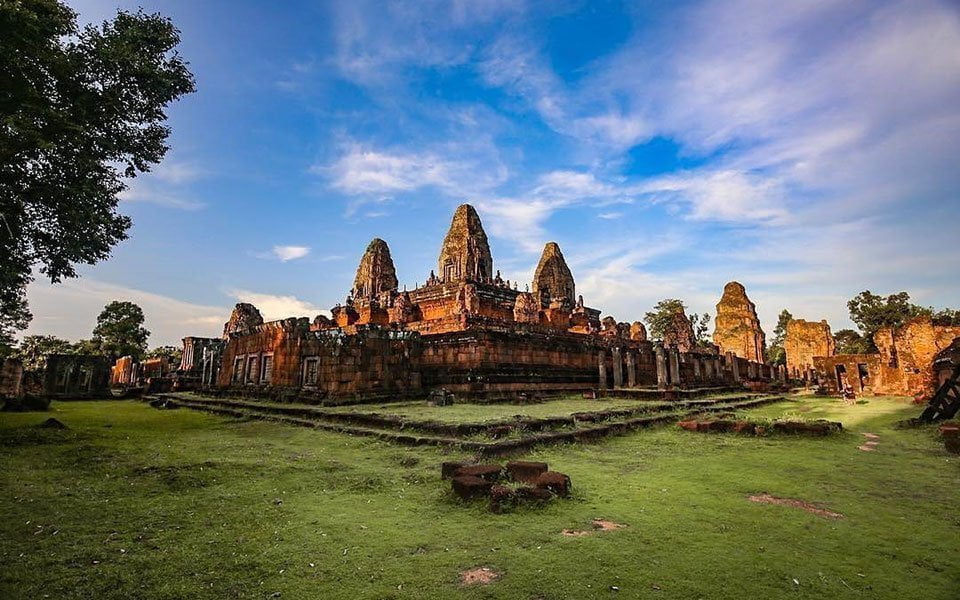
Rising in tiers of warm brick and laterite along the edge of the ancient Eastern Baray, Pre Rup temple stands as one of Angkor’s most striking temple-mountains. Its five ascending levels culminate in towers that catch the last light of day, making Pre Rup sunset Angkor one of the most sought-after experiences in Siem Reap.
Constructed in the 10th century by Rajendravarman II, this pyramid-shaped sanctuary symbolizes Mount Meru the cosmic mountain at the center of Hindu cosmology. Positioned along the Pre Rup Small Circuit, it offers something many Angkor temples do not: open, climbable terraces with panoramic views over jungle, reservoirs, and the fading silhouette of Angkor Thom.
For travelers seeking elevated perspectives and fewer crowds than Angkor Wat, Pre Rup delivers both drama and depth.
History and Religious Significance

A State Temple Reclaiming Angkor
Around 961 AD, Rajendravarman II established Pre Rup as his state Hindu temple after relocating the Khmer capital back to Angkor from Koh Ker. This marked a renewed assertion of royal authority and religious devotion.
Dedicated to Shiva, the temple once housed sacred lingas phallic emblems representing divine energy within its central sanctuaries. These Shiva shrines anchored the temple’s ritual function and reinforced the king’s connection to cosmic order.
The Meaning of “Pre Rup”
The name “Pre Rup” translates loosely to “turning the body” or “turning the mountain.” Scholars believe it references funerary rites in which ashes were ceremonially rotated around the temple’s upper tiers. Though interpretations vary, the association with royal cremation ceremonies adds a powerful spiritual dimension to Angkor Pre Rup history.
Architecturally, the temple bridges eras retaining the massiveness of Pre-Angkorian design while introducing increasingly refined ornamentation that would define later classical Khmer architecture.
For further context on Angkor’s temple-mountain symbolism, UNESCO’s overview of the site through UNESCO provides valuable historical framing.
Architectural Design and Temple-Mountain Layout
A Perfect Mandala in Stone
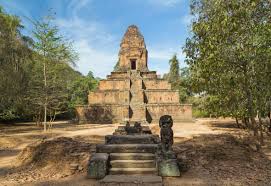
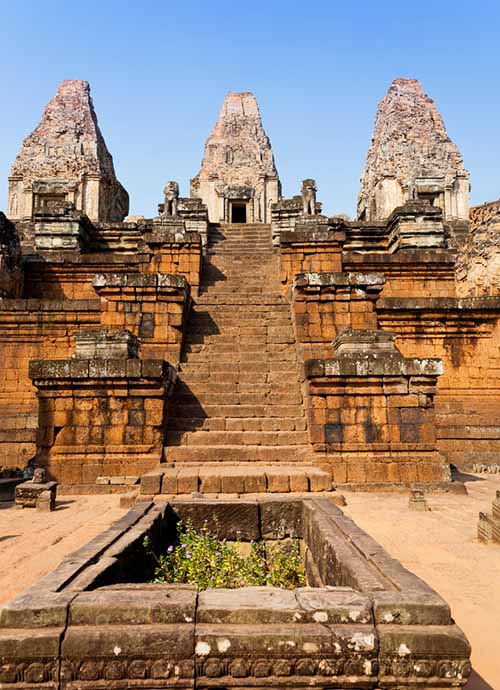
Pre Rup’s design exemplifies the Khmer Hindu pyramid Siem Reap style. The structure rises in five symmetrical tiers, forming a stepped pyramid crowned by five towers arranged in a quincunx pattern four at the corners and one central sanctuary.
This configuration mirrors Mount Meru surrounded by its subsidiary peaks, expressing sacred geometry in architectural form.
Outer Enclosures and Guardians
Approaching from the east, visitors cross causeways guarded by naga balustrades. Lion statues imposing and symmetrical stand sentinel at key stairways and gopuras (gate towers). These Pre Rup lion guardians symbolize strength and royal protection.
On the upper terraces, intricate details reward closer inspection:
- False windows framed by colonettes
- Antefixes shaped as mythical beasts
- Weathered yet elegant pediments
Though erosion has softened many carvings, the precision of alignment and spatial harmony remains unmistakable.
Iconic Features and Carvings

Upper Prasats
The five redented towers at the summit once contained Shiva lingas. Today, climbing Pre Rup towers reveals 360-degree vistas over rice fields and tree canopies. The open platforms amplify the sense of elevation rarely matched elsewhere in the Angkor complex.
Lion Guardians
Massive seated lions flank the eastern stairways, reinforcing the temple’s defensive symbolism. Their presence echoes similar motifs seen at other Eastern Baray temples such as Eastern Mebon.
Bas-Reliefs and Lintels
Though time has faded much of the ornamentation, lintels and door jambs still depict:
- Vishnu avatars
- Ganesha figures
- Floral scrollwork
These carvings illustrate the theological diversity of the period, when Hindu cosmology shaped state ideology.
Eastern Gopura
The grand eastern entrance aligns symbolically toward the Eastern Baray reservoir. Moonstones and layered thresholds create a ceremonial progression into sacred space.
Best Time to Visit: The Sunset Spectacular
Pre Rup has earned its reputation as one of the best sunset viewpoints in Angkor.
As the sun descends, the temple’s brick and sandstone surfaces glow deep red, intensifying its architectural contours. From the upper tiers, you can see jungle stretching toward Angkor Thom’s silhouette in the distance.
When to Go
| Time of Day | Experience | Recommendation |
|---|---|---|
| Sunrise | Cooler air, soft golden light | Ideal for photographers avoiding crowds |
| Midday | Harsh sun, extreme heat | Best avoided |
| Sunset | Fiery skies, glowing brick | Peak experience |
The steep staircases while climbable require caution. There are no railings on upper levels, so secure footing is essential.
Practical Visiting Tips
Pre Rup lies along the Pre Rup Small Circuit, approximately 10 km from Angkor Wat and easily paired with Banteay Srei or Eastern Mebon.
Getting There
- Tuk-tuk from Siem Reap
- Private taxi
- Guided Angkor tour
Visiting Pre Rup Tips
- Wear sturdy, grippy shoes for steep stone steps
- Bring water and sun protection
- Allocate 30–45 minutes for exploration
- Consider hiring a licensed guide to interpret its funerary and cosmological symbolism
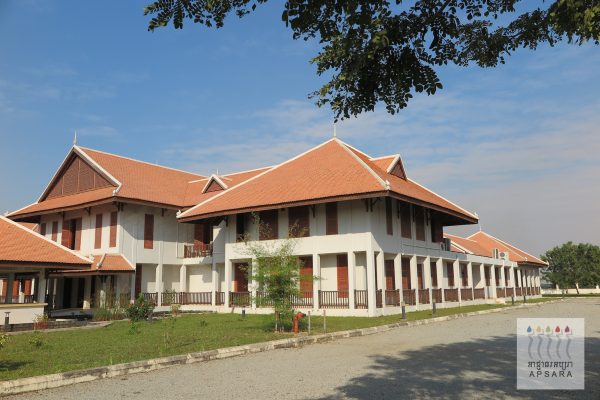
Site management and preservation fall under the oversight of the APSARA Authority, which enforces safety and conservation rules.

Summary Table: Pre Rup Highlights and Features
| Feature | Description | Why Climb It |
|---|---|---|
| Five-Tier Pyramid | Mount Meru replica with peaked towers | Ultimate sunset viewpoints |
| Lion Statues | Guardian figures at gopuras | Classic Khmer protectors |
| Shiva Lingas | Sacred symbols in central shrines | Hindu devotion’s spiritual core |
| Eastern Gopura | Moat-spanning entrance with carvings | Dramatic arrival portal |
| Terrace Platforms | Open upper levels for panoramas | Sweeping Angkor landscape vistas |
Conclusion
Pre Rup temple encapsulates the spiritual ambition and architectural intelligence of the Khmer Empire in a form that is both monumental and accessible. Its layered terraces, Shiva sanctuaries, and commanding viewpoints make it one of the most rewarding climbs in Angkor.
Whether you come for the symbolism of a Rajendravarman II temple-mountain or the spectacle of Pre Rup sunset Angkor skies, this temple offers more than a photo opportunity. It provides a profound vantage point geographically and spiritually over the legacy of Cambodia’s ancient empire.
Add Pre Rup to your Small Circuit itinerary for an elevated perspective that lingers long after the sun has disappeared beyond the horizon.