Angkor Panorama Museum – Immersive 360-Degree Views of Ancient Khmer Splendor
The Angkor Panorama Museum offers a strikingly different way to experience Cambodia’s ancient heritage. Instead of wandering through crumbling sandstone corridors under the tropical sun, visitors step inside a climate-controlled dome where colossal 360-degree Angkor Wat paintings wrap around them in vibrant detail.
Located near Angkor Wat in Siem Reap, this modern cultural attraction blends fine art, historical reconstruction, and multimedia storytelling. For travelers seeking context before exploring the temples or a mid-day break from the heat the Siem Reap panorama museum provides a powerful visual narrative of the Khmer Empire’s golden age.
It is particularly compelling for families, first-time visitors, and history enthusiasts who want to visualize Angkor not as ruins, but as a thriving imperial capital.
What Makes Angkor Panorama Museum Unique
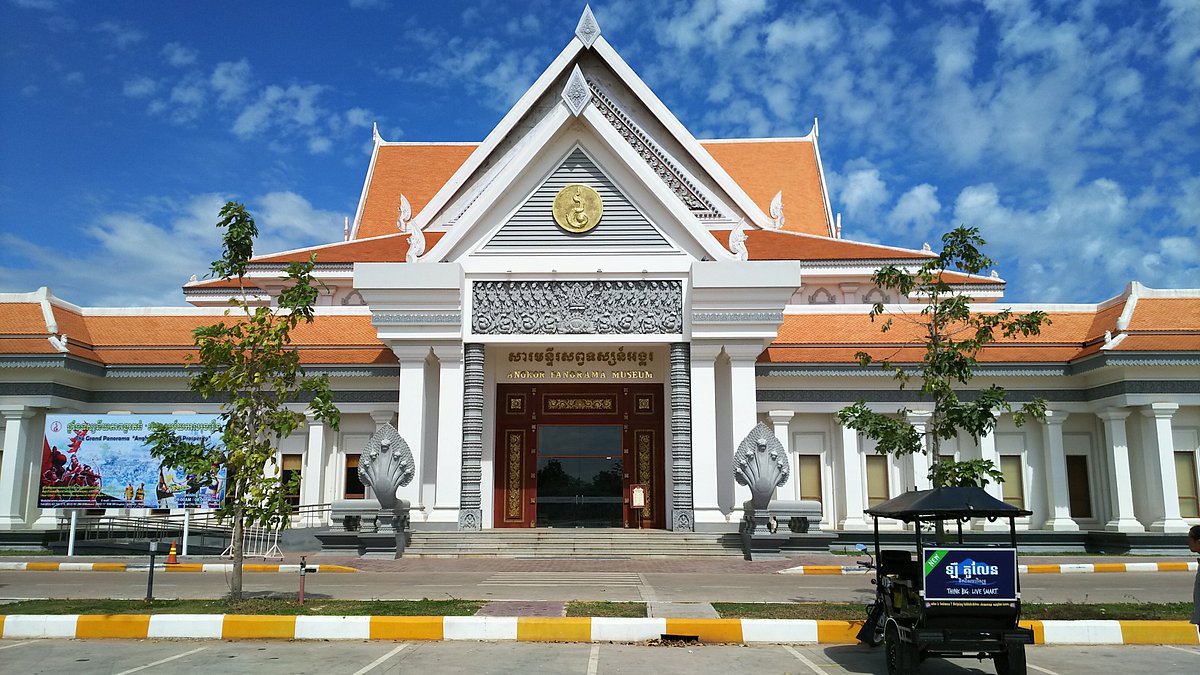
Housed in a distinctive dome-shaped building, the Angkor Panorama Museum centers around four monumental cylindrical murals. Each hand-painted panorama stretches over 100 meters in length and rises approximately 15 meters high, forming a continuous visual horizon that encircles viewers.
Crafted by Vietnamese artists using traditional techniques, these hand-painted Angkor murals depict:
- The construction of Angkor Wat
- Daily Khmer life at the empire’s height
- Apsara dancers in ritual performance
- Mythological episodes from the Ramayana
The immersive design goes beyond static art. Strategic lighting, ambient sound effects, and rotating viewing platforms simulate movement through time. Visitors don’t simply observe the Khmer Empire panoramas they feel embedded within them.
Unlike conventional galleries, this format mirrors panoramic art traditions popular in 19th-century Europe while adapting them to Southeast Asian heritage. The result is one of the most distinctive Angkor historical exhibits in Cambodia.
The Four Main Panoramic Exhibits
Angkor Wat Panorama

This panoramic masterpiece recreates 12th-century temple construction under King Suryavarman II. Workers haul sandstone blocks, elephants assist with heavy lifting, and wooden scaffolding surrounds the rising towers.
The 360 degree Angkor Wat painting transforms architectural history into a living scene of engineering precision and spiritual devotion.
For deeper historical context on Angkor Wat’s construction and symbolism, the official overview by UNESCO provides authoritative insight into its World Heritage significance: https://whc.unesco.org/en/list/668/
Khmer Empire Panorama
Here, the empire pulses with life. Markets bustle, royal processions glide past, and monks conduct rituals beneath towering temples. The scene situates Angkor not merely as a sacred site but as a sophisticated urban civilization with advanced irrigation, trade networks, and governance.
This exhibit visualizes the socio-political landscape often referenced in Angkor inscriptions and bas-reliefs, helping visitors understand how the empire functioned at scale.
Apsara Dance Panorama

The Apsara dance panorama celebrates celestial dancers drawn from Hindu-Buddhist cosmology. These graceful figures, carved extensively across Angkor temples, symbolize divine beauty and spiritual harmony.
The mural’s soft lighting mimics sunset hues, enhancing the ethereal quality of the dancers. Visitors gain a visual connection to the classical Apsara dance tradition still performed today in Cambodia.
For background on Khmer classical dance heritage, the cultural documentation by UNESCO offers further context on its preservation as intangible heritage.
Preah Vihear Panorama
Dramatic mountain landscapes frame this depiction of Preah Vihear Temple. Perched atop cliffs along the Dangrek Mountains, the temple appears enveloped in mist and dense jungle.
The mural emphasizes both architectural grandeur and geographical isolation, reminding viewers that Angkor’s influence extended far beyond the central plains.

Additional Exhibits and Interactive Elements
Beyond the panoramic hall, visitors encounter introductory galleries that contextualize the art:
- Scaled temple models
- Replica artifacts
- Touchscreen displays explaining Khmer cosmology and construction techniques
A 10-minute 3D historical film summarizes Angkor’s rise and fall from early formation to 15th-century decline. Narration is available in multiple languages, making the museum accessible to international audiences.
The gift shop and café provide Khmer souvenirs and shaded seating overlooking rice fields an inviting pause before or after temple exploration.
History and Purpose Behind the Museum
Opened in 2014 as a public-private venture, the Angkor Panorama Museum was designed to preserve and communicate Angkor’s visual narrative in an era of mass tourism.
Unlike artifact-centered institutions such as Angkor National Museum, this museum emphasizes large-scale visual storytelling. It translates archaeological knowledge into immersive imagery, helping visitors interpret the scattered ruins across the Angkor Archaeological Park.
The paintings required years of collaboration between artists, historians, and researchers to ensure historical credibility while maintaining dramatic impact. This blend of scholarship and spectacle distinguishes the Siem Reap panorama museum from typical regional attractions.
Practical Visitor Information and Tips
- Location: Approximately 1 km from Angkor Wat’s main ticket booth
- Hours: Daily 8:00 AM – 7:30 PM
- Tickets: $18 USD (includes audio guide)
- Duration: 1–1.5 hours recommended
Visiting Angkor Panorama Siem Reap: Expert Tips
- Pair with sunrise or sunset temple visits for optimal scheduling.
- Visit mid-morning or late afternoon to avoid peak crowds.
- The museum is wheelchair accessible and family-friendly.
- Photography is encouraged ideal for social media and educational sharing.
If you’re planning your broader Angkor itinerary, consult the official tourism portal from Cambodia’s Ministry of Tourism: https://www.tourismcambodia.com/
Summary Table: Angkor Panorama Museum Highlights
| Exhibit/Feature | Description | Visitor Experience |
|---|---|---|
| Angkor Wat Panorama | 360° construction scene | Witness ancient Khmer engineering |
| Khmer Daily Life | Bustling empire city | Feel the pulse of Angkor society |
| Apsara Dancers | Celestial performance mural | Experience spiritual artistry in motion |
| 3D Historical Film | Rise and fall of Angkor | Concise cinematic historical overview |
| Viewing Platforms | Rotating panoramic floors | Immersive, all-angles exploration |
Conclusion
The Angkor Panorama Museum transforms archaeological history into immersive visual storytelling. Through monumental Khmer Empire panoramas, 360-degree Angkor Wat paintings, and interactive exhibits, it reconstructs a civilization at its zenith.
For travelers exploring Siem Reap cultural attractions, this museum provides narrative clarity before venturing into the temple complexes themselves. It bridges imagination and scholarship, making ancient Cambodia tangible and immediate.
Add this family-friendly attraction near Angkor Wat to your itinerary. The ruins inspire awe but here, the empire lives again in full color and motion.