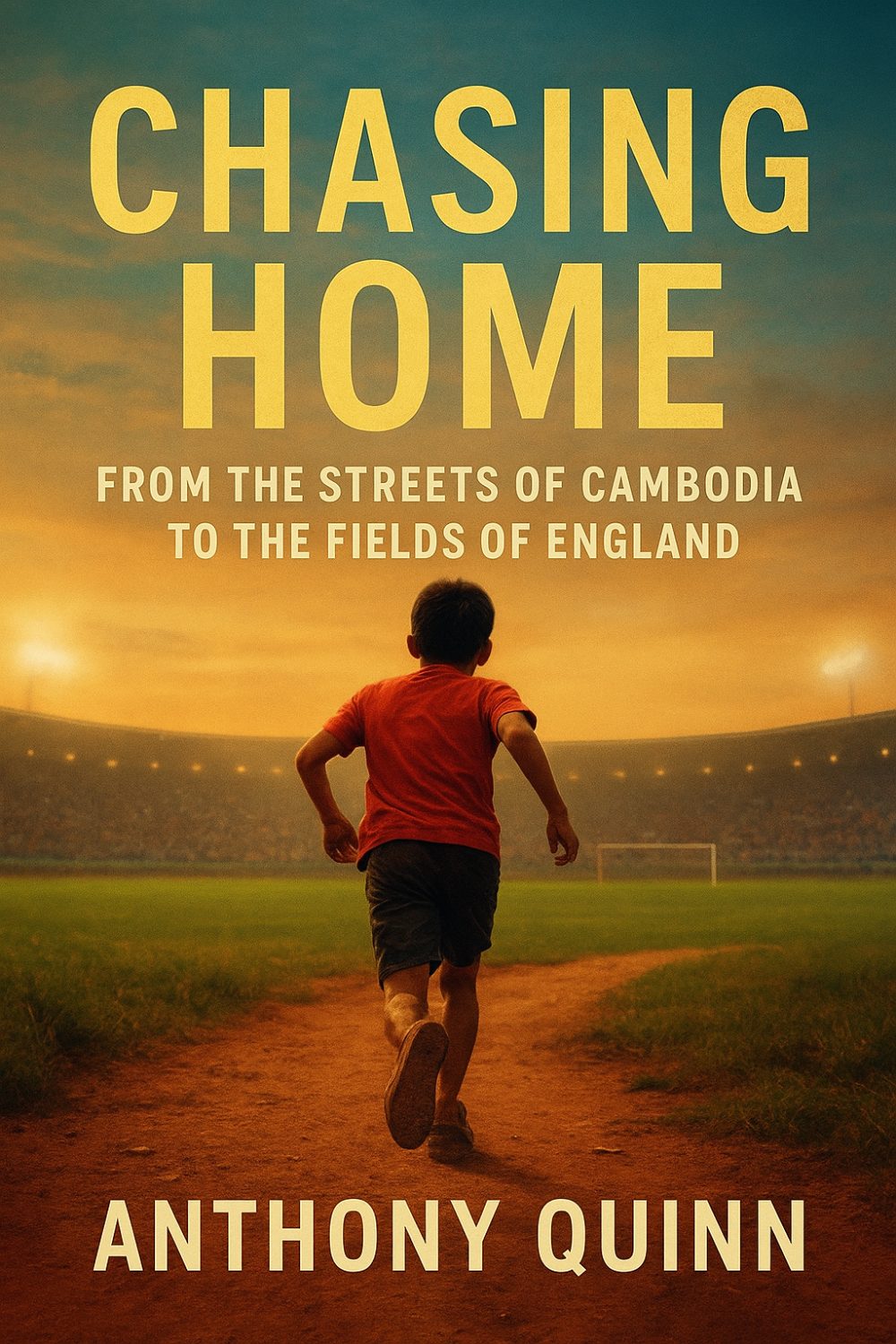
Chasing Home: From the Streets of Cambodia to the Fields of England — A Story of Loss, Identity, and Unbreakable Hope
In Chasing Home: From the Streets of Cambodia to the Fields of England, Anthony Quinn presents a deeply moving story about survival, belonging, cultural identity, and hope.
Set between the vibrant riverside markets of Cambodia and the quiet countryside of England, this powerful novel explores what it truly means to search for home after unimaginable loss.
A Powerful Coming-of-Age Story Set in Cambodia
The novel opens in a Cambodian riverside market alive with color, sound, and daily ritual. The sensory richness immediately grounds readers in Southeast Asian culture from street vendors and family bonds to the rhythm of life shaped by resilience and community.
At its heart is a young boy and his mother, whose relationship anchors the emotional core of the book. Their world is modest but full of meaning. The writing captures the warmth of maternal love, the dignity of hard work, and the fragile beauty of ordinary days.
Without revealing key plot turns, a sudden tragedy disrupts this world and propels the story into its deeper exploration of loss and survival.

A Realistic Portrayal of Street Survival and Childhood Resilience
One of the most compelling aspects of Chasing Home is its honest depiction of street life in Cambodia. Rather than dramatizing poverty, the novel presents survival through small, human choices sharing food, forming fragile alliances, and learning the unspoken rules of the city.
Themes of child displacement, vulnerability, and moral complexity are handled with restraint. The narrative avoids sensationalism and instead focuses on emotional authenticity. Readers witness how resilience develops quietly, shaped by instinct, memory, and the refusal to surrender hope.
For those searching for books about street children, global poverty narratives, or survival memoir-style fiction, this novel offers both emotional depth and cultural context.
Adoption, Cultural Identity, and Life in England
As the story shifts to England, the novel expands into themes of international adoption, identity formation, and cultural displacement. The contrast between Cambodia’s bustling markets and England’s quiet fields highlights the internal tension of starting over in a foreign land.
Language barriers, social expectations, and emotional isolation become part of the protagonist’s journey. The book explores how adoptees often navigate dual identities carrying memory from one homeland while adapting to another.
Readers interested in adoption stories, cross-cultural identity, and immigrant experiences will find this section particularly resonant.
Football, Redemption, and the Power of Belonging
Sport plays a meaningful symbolic role in the narrative. Football becomes more than a game; it becomes structure, discipline, and recognition. Running once an act of survival evolves into a path toward confidence and belonging.
The novel does not rely on sports clichés. Instead, it thoughtfully connects physical movement with emotional healing. The transformation feels earned, rooted in perseverance rather than sudden fortune.
For readers who enjoy inspirational sports fiction intertwined with emotional growth, this layer of the story adds powerful momentum.
Themes of Hope, Memory, and the Meaning of Home
At its core, Chasing Home asks enduring questions:
What defines home?
Is it geography, family, memory, or choice?
Can hope survive displacement?
The narrative suggests that home is something carried within preserved in memory, rebuilt through action, and reclaimed through courage. Symbols such as a red scarf and the act of running reinforce the idea that identity can endure across continents.
The prose remains lyrical yet accessible, making the book ideal for book clubs, educators, and readers seeking emotionally intelligent literary fiction.
Why Chasing Home Is Relevant in Today’s World
In an era shaped by global migration, adoption conversations, and identity exploration, this novel feels timely and important. It speaks to readers who have experienced cultural transition, loss, or the search for belonging.
Its themes resonate with:
- International adoptees
- Immigrant families
- Readers of inspirational survival stories
- Fans of emotionally driven coming-of-age novels
More than anything, Chasing Home: From the Streets of Cambodia to the Fields of England is a story about movement forward, across borders, through grief, and toward hope.
If you are looking for a powerful novel about resilience, cultural identity, adoption, and finding home after loss, this is a book that will remain with you long after the final chapter.