Complete Guide to Cambodia Visas in 2026: Requirements, Applications, and Extensions
Cambodia continues to maintain one of Southeast Asia’s most accessible visa systems in 2026, making travel to Phnom Penh, Siem Reap, Sihanoukville, and beyond relatively straightforward for most nationalities. Whether you are visiting Angkor Wat, exploring Cambodia’s emerging digital nomad scene, or planning a longer stay for business or retirement, understanding the current visa rules is essential.
This comprehensive guide explains Cambodia’s visa types, application methods, costs, extensions, and entry points. It is designed to help tourists, expats, and long-term visitors navigate Cambodian immigration requirements with confidence and avoid common pitfalls such as overstays or incorrect visa choices.

Main Visa Types for Cambodia Visitors
Cambodia offers two primary visa categories for short-term visitors and long-stay travelers: the Tourist Visa (Type T) and the Ordinary Visa (Type E). These form the foundation of Cambodia’s immigration system for foreigners in 2026.
According to regional travel authorities such as IndoChina Charm Travel, these visas are available to most nationalities arriving by air or land.
Tourist Visa (Type T)
The Tourist Visa (T-Class) is intended for leisure travel and short visits. It allows a single entry with a maximum stay of 30 days and costs USD $30. This visa can be obtained via the official Cambodia e-Visa system, visa on arrival, or through a Cambodian embassy or consulate.
While popular among short-term travelers, the tourist visa has limited extension options and is not suitable for employment or long-term residence.
Ordinary Visa (Type E)
Despite its name, the Ordinary Visa (E-Class) is the most flexible visa option in Cambodia. It also grants 30 days on arrival at a cost of USD $35, but unlike the tourist visa, it can be extended for 1, 3, 6, or 12 months.
This visa is commonly used by expats, business owners, job seekers, retirees, and students. Extensions are categorized under sub-classes such as EB (business/work), EG (job seeking), ER (retirement), and ES (student). Detailed breakdowns of these extensions are outlined by Amazing Indochina.
Cambodia also issues K-Class visas for individuals of Khmer descent, granting lifetime multiple-entry privileges, though documentation requirements are stricter.
Basic Visa Requirements for All Applicants
All travelers entering Cambodia must meet a set of standard immigration requirements, regardless of visa type.
Your passport must be valid for at least six months beyond your entry date and contain at least one blank page, as confirmed by travel resources such as More Than Temples. Immigration officers are strict on passport validity, and travelers with insufficient validity may be denied boarding or entry.
Applicants typically need:
- A recent passport-sized photograph (digital format for e-Visa applications)
- Proof of accommodation or onward travel (occasionally requested)
- Sufficient funds for the duration of stay
The official Cambodian e-Visa portal, operated by the Ministry of Foreign Affairs, provides updated documentation requirements and accepted nationalities.
Cambodia also grants visa-free entry to citizens of ASEAN member states, including Thailand, Vietnam, Laos, Malaysia, Singapore, Indonesia, the Philippines, Brunei, and Myanmar, for short stays, as listed on the official evisa.gov.kh website.
How to Apply: e-Visa, Visa on Arrival, or Embassy
Travelers to Cambodia can choose from three main visa application methods, depending on nationality and travel preferences.
Cambodia e-Visa
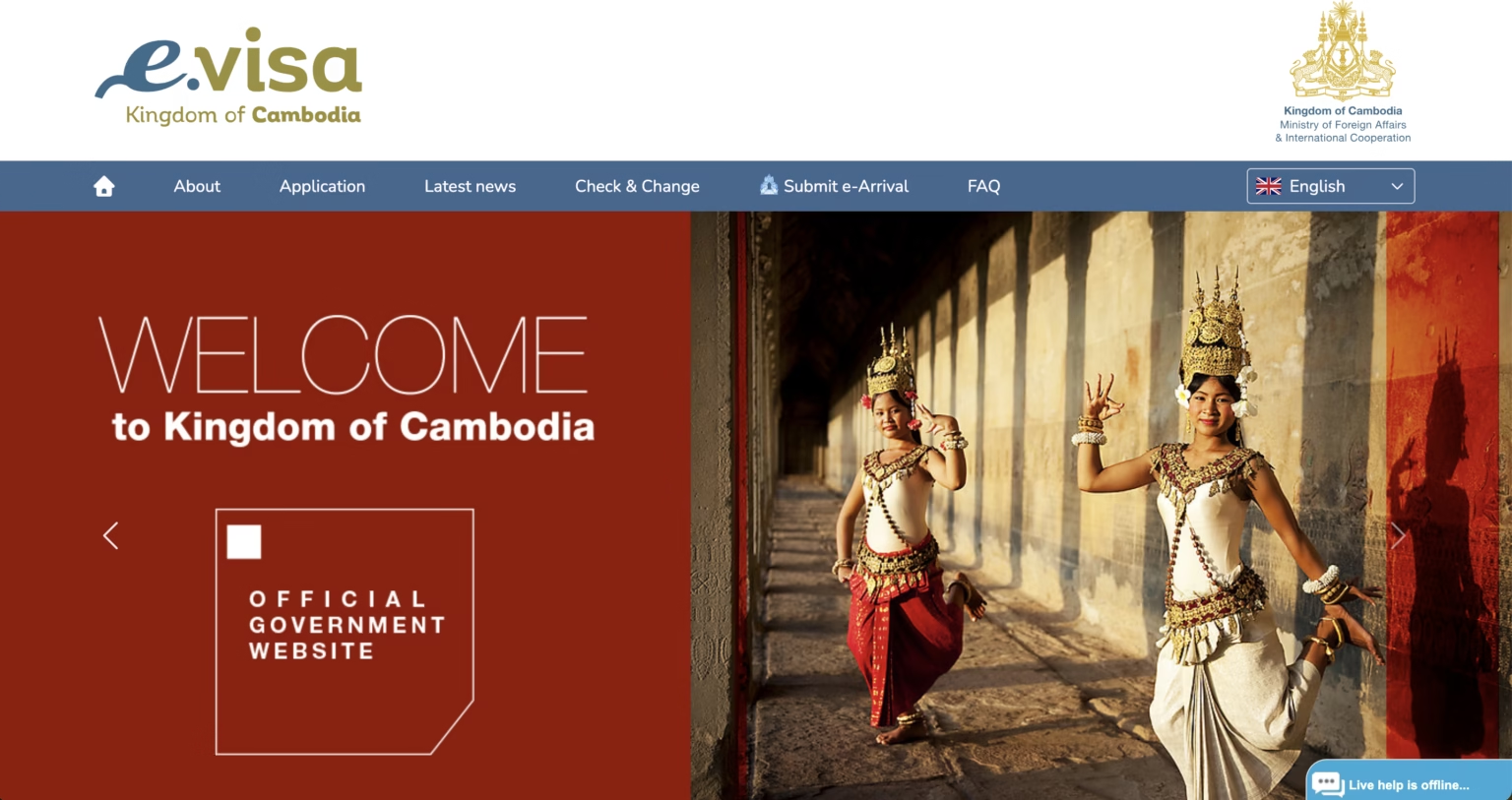
The Cambodia e-Visa is the most convenient option for many travelers. Applications are submitted online via the official government portal at evisa.gov.kh, with processing typically completed within three business days.
Applicants pay USD $30 for Tourist visas or USD $35 for Ordinary visas using a credit or debit card. Once approved, the e-Visa is valid for three months from the date of issue and allows a single entry into Cambodia.
Visa on Arrival (VOA)
Visa on arrival remains widely available at international airports in Phnom Penh, Siem Reap, and Sihanoukville, as well as most land border crossings. Travelers pay in clean U.S. dollar bills, and recent policy updates indicate that passport photos are no longer routinely required at airports.
Travel guidance platforms such as More Than Temples note that having exact change and a completed arrival form can speed up the process.
Embassy Visa
Certain nationalities may be required to apply in advance at a Cambodian embassy or consulate. This method is also used for group travel, diplomatic visas, or special circumstances. The Cambodia Acclime Immigration Guide provides country-specific information for restricted passports.
Visa Extensions and Long-Term Stays
One of Cambodia’s defining features is the relative ease of extending visas, particularly for holders of the Ordinary (E-Class) visa.
Both Tourist and Ordinary visas can be extended through immigration offices or licensed visa agents in Phnom Penh or Siem Reap, though tourist visa extensions are limited. According to IndoChina Charm Travel, extensions typically range from one to twelve months, depending on visa type.
Ordinary visa extensions are divided into categories:
- EB for business or employment
- EG for job seekers
- ER for retirees
- ES for students
Work permits are required separately for employment, even with a valid EB extension, as outlined by Cambodia Acclime.
Extension fees generally start around USD $45 and increase with duration. Overstaying a visa results in fines of USD $10 per day, payable upon exit or during extension processing.
Entry Points and Practical Travel Tips
Cambodia accepts e-Visas and visas on arrival at major international airports and many overland border crossings, including popular Thai-Cambodian routes such as Poipet and Cham Yeam.
Travelers are advised to carry printed copies of their e-Visa approval and photocopies of their passport at all times. Lost visas or overstays can result in delays, fines, or additional paperwork, as noted by Cambodia Acclime’s immigration resources.
In 2026, Cambodia continues to expand digital immigration systems, including electronic arrival forms and centralized visa databases. Travelers should monitor official government websites for real-time updates.
Summary Table: Cambodia Visa Options in 2026
| Visa Type | Cost (USD) | Duration | How to Get | Best For |
|---|---|---|---|---|
| Tourist Visa (T) | 30 | 30 days | e-Visa, Visa on Arrival, Embassy | Leisure travel, short visits |
| Ordinary Visa (E) | 35 | 30 days + extensions | e-Visa, Visa on Arrival, Embassy | Business, expats, long stays |
| Visa Extensions | 45+ | 1–12 months | Immigration offices | Work, study, retirement |
| Visa-Exempt Entry | Free | Short stay | Automatic (select ASEAN countries) | Regional travelers |
Conclusion
Cambodia’s visa system in 2026 remains one of the most traveler-friendly in Southeast Asia, combining convenient e-Visa access with flexible extension options for long-term stays. Whether you are visiting Cambodia for tourism, relocating as an expat, or exploring business opportunities, choosing the correct visa from the outset can save time, money, and unnecessary stress.
Because immigration policies may change, travelers should always verify the latest requirements through official government sources such as evisa.gov.kh and trusted regional travel authorities. With the right preparation, Cambodia offers a smooth entry process and the freedom to experience its rich Khmer culture, dynamic cities, and historic landmarks well beyond a typical short visit.